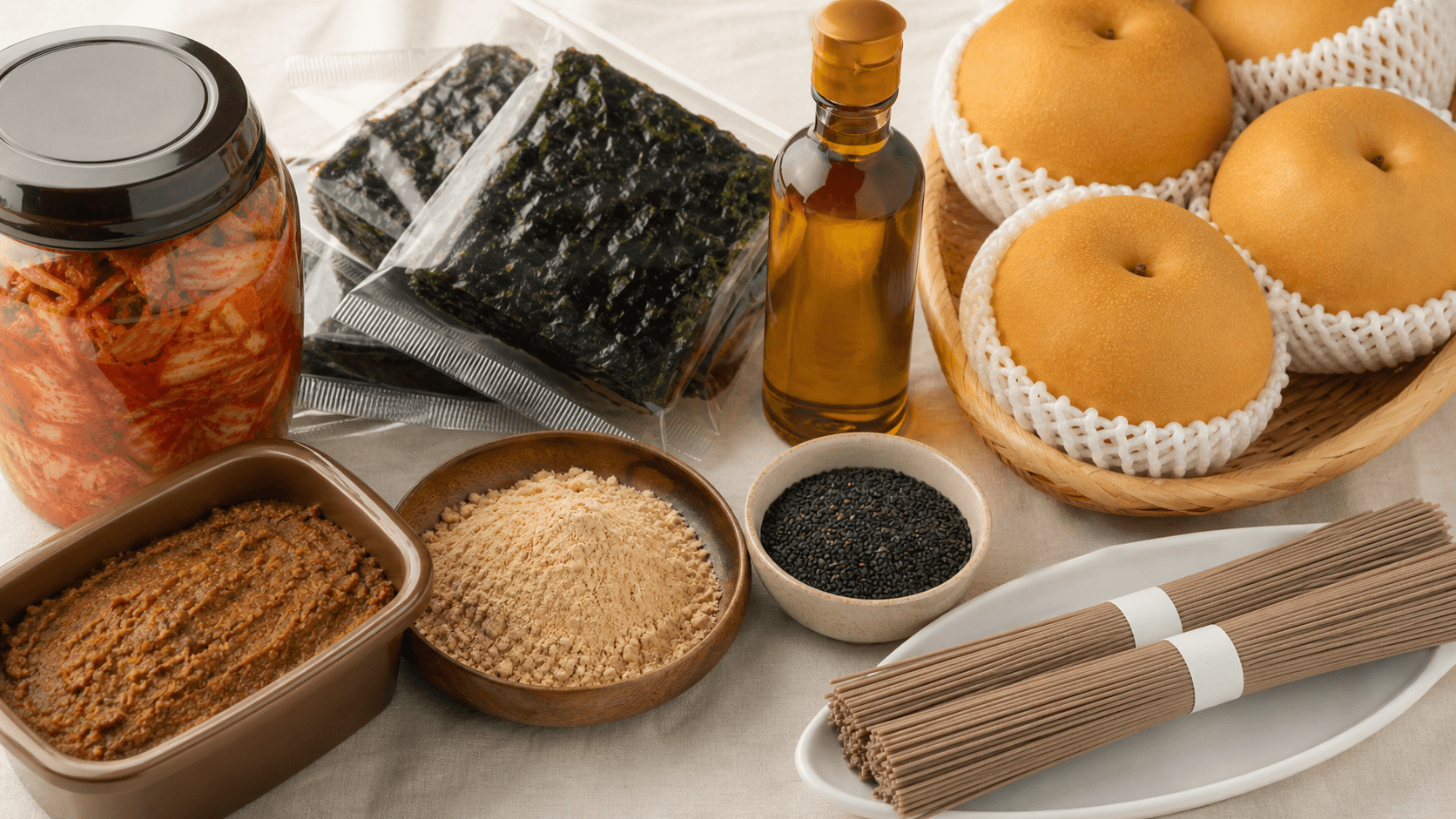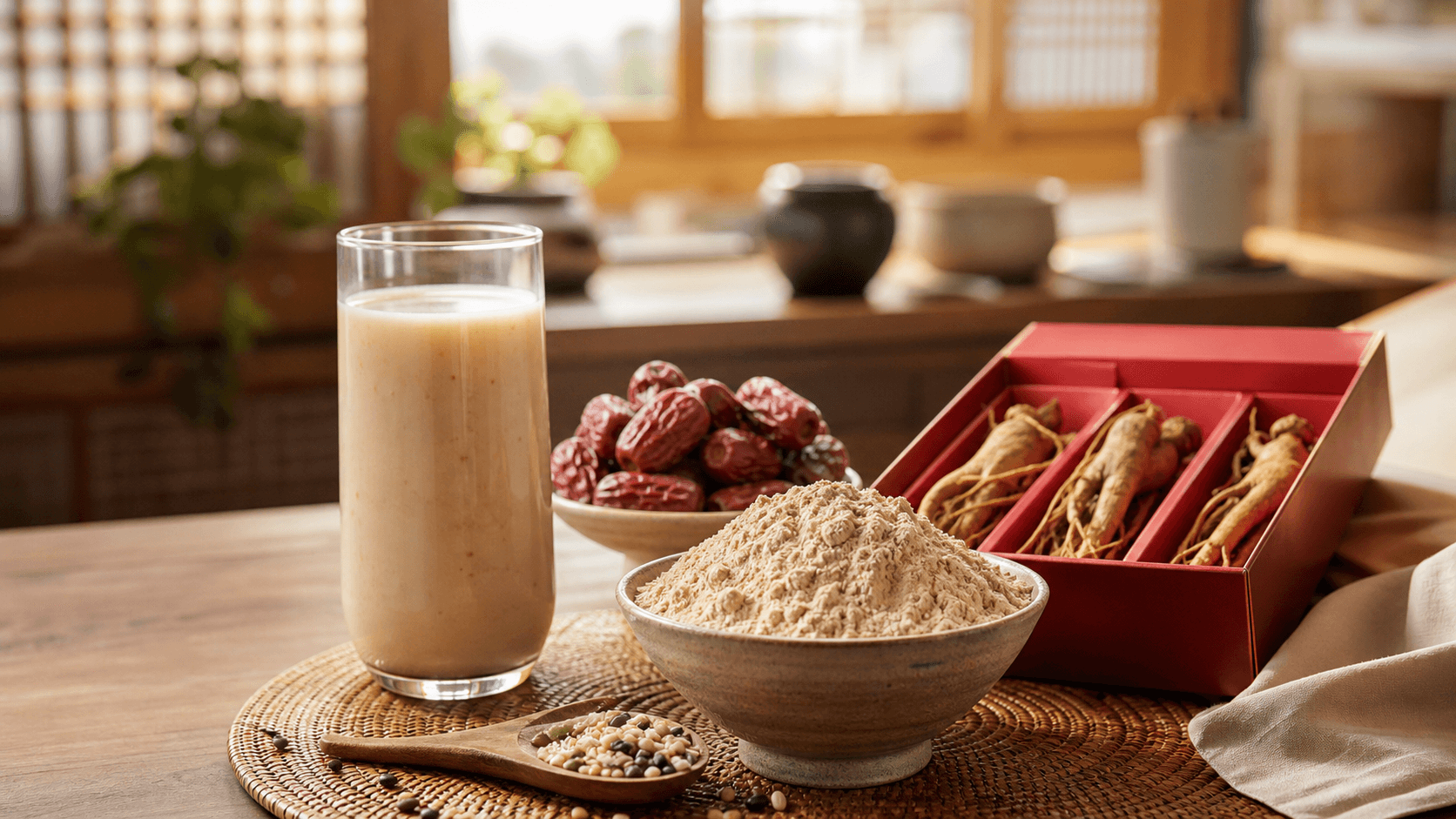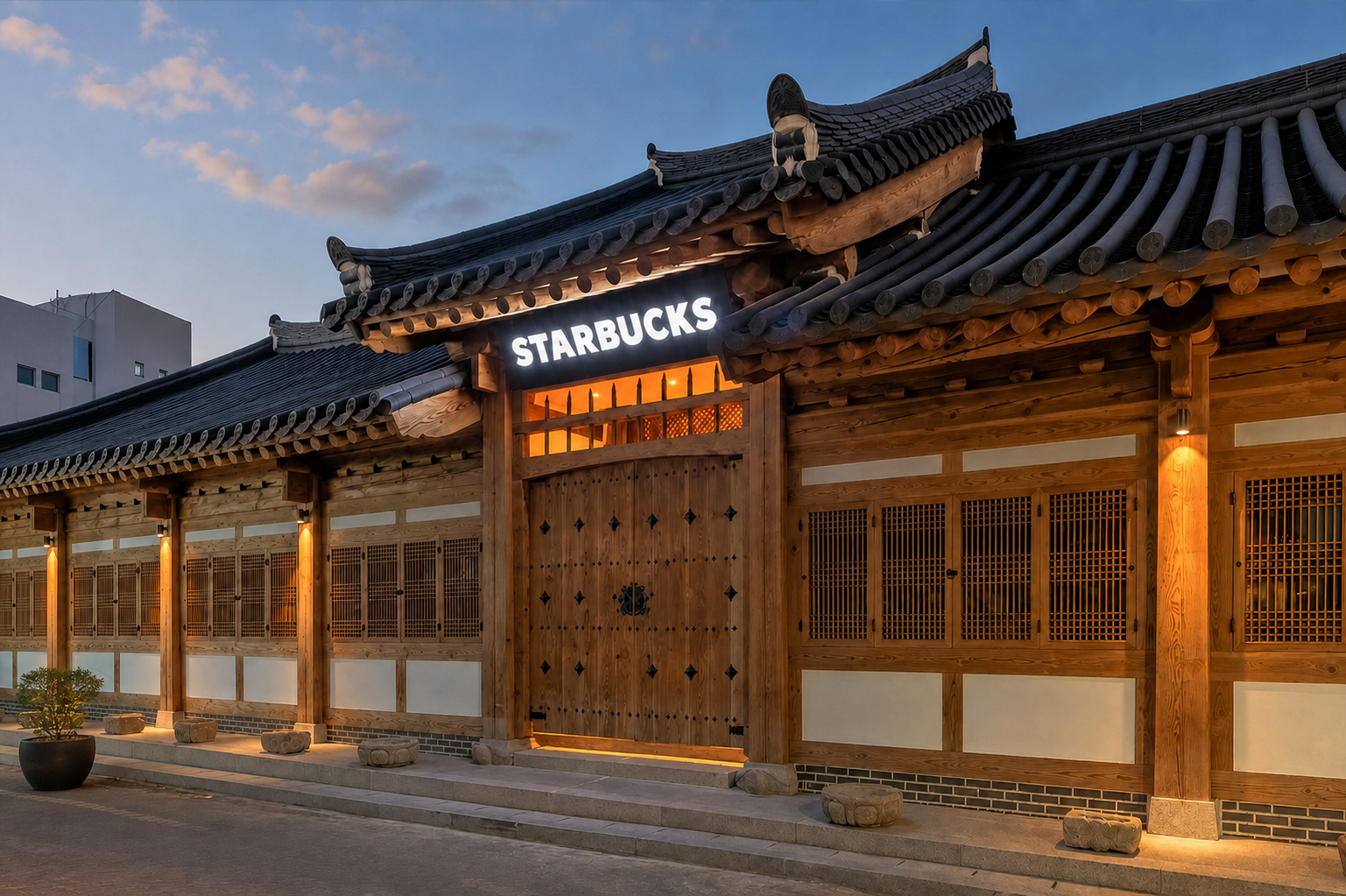
A café visit in Korea can be a quick coffee stop, a dessert outing, or an hour spent talking, studying, or resting between attractions. Both large chains and independent cafés are common, while some neighborhoods have entire “café streets” built around coffee, desserts, and distinctive spaces.
Ordering is usually straightforward once you understand the basic sequence. The main variables are whether you order from a person or a kiosk, where you collect your drink, and whether the café has rules about seating or minimum orders.
Quick answer: Choose your drink and size, order at the counter or kiosk, pay, keep the receipt or pager, and collect your order when your number is called or the pager vibrates. Check the entrance, menu, and tables for any café-specific rules.
Why Cafés Are Such a Visible Part of Life in Korea
Cafés in Korea are not used only for a quick caffeine break. They commonly serve as places to meet friends, talk after a meal, work on a laptop, or spend time over coffee and dessert.
The experience varies considerably. One café may focus on carefully brewed coffee, while another is known for cakes, salt bread, shaved ice, a rooftop view, or a renovated hanok, which is a traditional Korean house. Large bakery cafés outside city centers can feel more like destinations than neighborhood coffee shops.
For travelers, this variety is the main appeal. The practical limitation is that a photogenic or widely shared café may have queues, restricted seating times, or popular desserts that sell out. Check the café’s latest notice before making a long detour.
How Ordering Works at a Korean Café
Most café visits follow one of three patterns.
Ordering at the Counter
At a staffed counter, choose your drink, size, temperature, and any options before paying. You may be asked whether you are staying or taking your order away.
A few simple phrases can help:
- “Igeo juseyo” (이거 주세요): “This one, please.” You can point to the item on the menu.
- “Hot” or “ice”: These English words are widely used on café menus.
- “Meokgo galgeyo” (먹고 갈게요): “I’ll have it here.”
- “Gajigo galgeyo” (가지고 갈게요): “I’ll take it to go.”
- “Yeongsujeung gwaenchanayo” (영수증 괜찮아요): “I don’t need the receipt.”
You do not need to memorize Korean to order successfully. Pointing to a menu item or using a translation app is often clearer than trying to explain a complicated order.
Using a Self-Order Kiosk
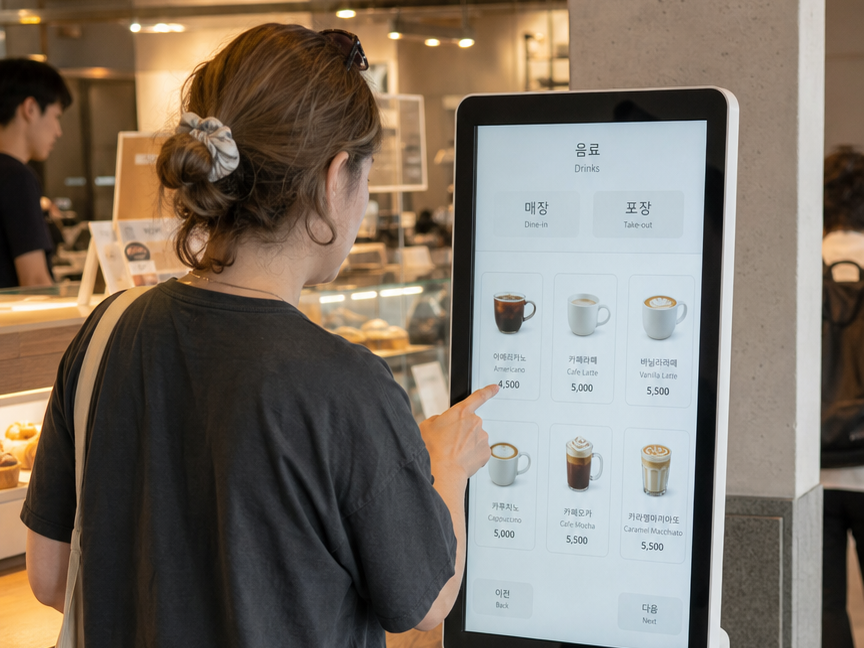
Some chains and busy cafés use touchscreen kiosks. Look for a language button, often marked with a globe or the word “English.”
The usual sequence is:
- Select dine-in or takeaway.
- Choose a menu category.
- Select your drink and temperature.
- Choose a size and any optional additions.
- Review the order.
- Pay by card.
- Keep the printed order number.
Kiosk layouts differ, and not every machine provides the same languages or payment options. If your international card is rejected, ask whether you can order and pay at the counter instead.
Ordering From a Table
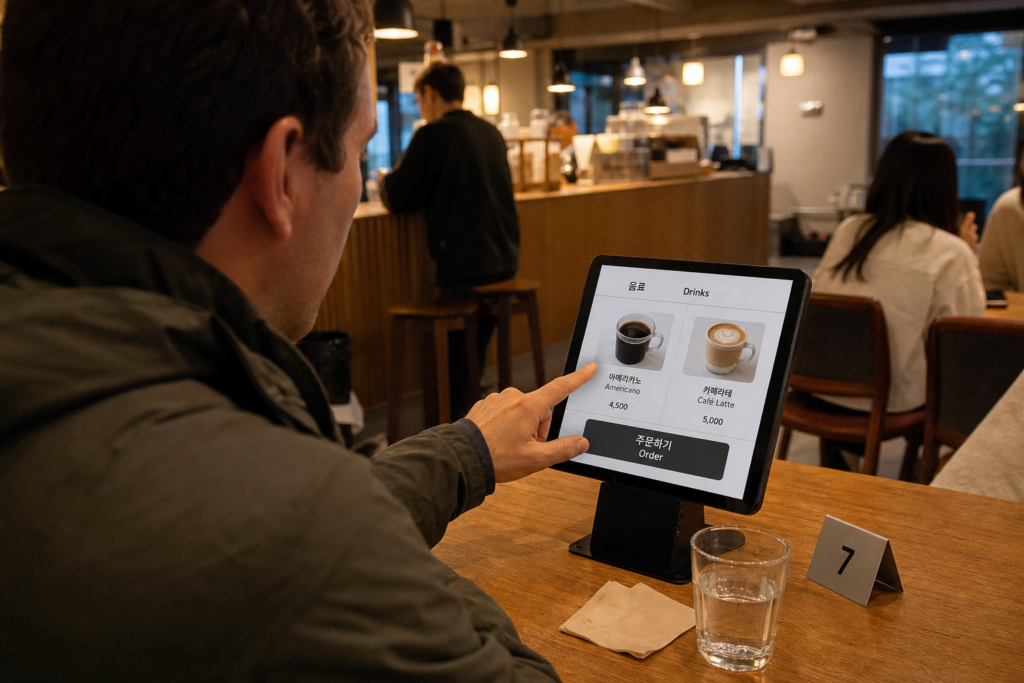
Table service is less common in ordinary coffee shops, but it may be available at traditional tea houses, hotel lounges, or cafés designed around a longer dessert experience.
Follow the instructions at the entrance rather than assuming that someone will come to your table. You may need to order at the counter first, receive a table number, or join a waiting list.
Understanding the Menu
An Americano is one of the easiest drinks to recognize and is normally available hot or iced. Espresso drinks such as café latte, cappuccino, vanilla latte, and mocha are also common.
You may encounter the following menu terms:
- Ade: A sweet, carbonated fruit drink rather than coffee
- Einspänner: Coffee topped with a thick layer of cream; recipes vary by café
- Hand drip: Coffee brewed to order, sometimes with a choice of beans
- Cold brew: Coffee extracted cold and generally served chilled
- Misugaru: A grain-based drink with a mild, nutty flavor
- Yuja-cha (유자차): Sweet citron tea, usually served warm
- Bingsu (빙수): Shaved ice with toppings, often intended for sharing
- Signature menu: A drink or dessert developed by that particular café
Adjusting the sweetness or amount of ice may be possible, especially at chains, but it is not guaranteed. At a small café, a signature drink may be served only according to the house recipe.
If you have an allergy or dietary restriction, do not rely on the English menu name alone. Cream drinks, bread, cakes, and traditional beverages may contain milk, eggs, nuts, grains, honey, or ingredients that are not obvious from the display.
Ask staff to confirm the ingredients rather than assuming that an item can be modified.
Paying and Collecting Your Order
Credit cards are widely accepted in Korea, including at cafés. However, it is sensible to carry a second card or a small amount of Korean won as a backup.
Some mobile payment services displayed at the register require a Korean account. Do not assume that every payment option shown will work with an international phone or bank account.
After paying, you may receive:
- A numbered receipt
- A vibrating pager
- A table number
- An order confirmation through the café’s app
Wait near the collection counter without blocking it. When your number appears on a screen, is announced, or your pager vibrates, collect your order.
Water, napkins, straws, cup sleeves, and cutlery are frequently kept at a self-service station.
Tipping is not normally expected. If the café has a tray-return area, take your cups and dishes there before leaving.
Café Etiquette Visitors Should Know
Check for a One-Order-Per-Person Rule
Some cafés require each seated guest to order a drink or another qualifying item. This is not a nationwide rule, so look for a sign or ask a staff member.
A shared cake may not count as an individual order. Confirm the policy before your group sits down.
Check the Seating System First
At some cafés, one person in a group can find a table while another person orders. At others, customers must order first, join a waiting list, or receive a seat assignment.
Follow the signs and instructions at that particular café instead of assuming that every shop uses the same system.
Respect Seating and Time Limits
Popular cafés may limit how long customers can use a table during busy periods. Some cafés also restrict laptops on weekends or designate particular tables for computer use.
These policies are set by individual businesses and may change according to the day or time.
Match the Atmosphere of the Café
Not every Korean café is quiet. A large social café and a small specialty coffee shop can have very different atmospheres.
Keep your conversation at an appropriate volume and take long phone or video calls outside when possible.
Take Photographs Considerately
Interior photography is often allowed, but permission is not automatic. Do not photograph staff members or other customers closely without their consent.
Avoid entering roped-off areas or rearranging displays for a photograph. Check for signs before using a tripod, flash, or professional camera equipment.
Return Your Tray When Required
Self-service cafés often expect customers to return their trays and separate their waste. Follow the labels at the return station rather than leaving liquids, cups, and food waste together.
How Much Time Should You Allow?
For a normal coffee stop, allow around 30 to 60 minutes. A café known for its architecture, view, bakery, or seasonal desserts may deserve more time, particularly when there is a queue.
Choose your visit according to your schedule:
- Quick stop: Use a chain or neighborhood café near a station and avoid places with a waiting list.
- One-hour break: Choose a café with seating and enjoy a drink with one dessert.
- Longer café visit: Check the seating rules, last order time, laptop policy, and weekend demand before settling in.
A remote café should earn its place in your itinerary through more than its appearance. Consider the transportation time, possible wait, and whether its signature menu is available that day.
Choosing a Café That Suits Your Trip
Choose a large chain when you want predictable ordering, multiple locations, takeaway service, and a better chance of finding a familiar menu or English-language kiosk.
Choose an independent coffee shop when the beans, brewing method, or barista-led menu matters more than speed. English information may be limited, although menus often include photographs or recognizable coffee terms.
Choose a bakery café when your group wants both drinks and a substantial selection of bread or desserts. Popular products may sell out later in the day.
Choose a traditional tea café when you want Korean teas or sweets rather than a standard espresso menu. Service may be slower, and some menu sets are intended for a longer visit.
Choose a café street or café neighborhood when variety matters. Having several cafés in one area makes it easier to change your plans if the first shop is full.
Essential Tips for a Smoother Visit
- Check the café’s official social media for temporary closures, last orders, sold-out desserts, and reservation or waiting rules.
- Carry a payment card and a small amount of Korean won as a backup.
- Take a photo of the Korean menu item if you need to ask about it.
- Confirm ingredients directly when allergies or dietary restrictions are involved.
- Look for an English-language option before starting a kiosk order.
- Keep your receipt or pager until every item has arrived.
- Ask before moving chairs or taking extensive interior photographs.
- Return your tray if there is a visible self-service station.
- Avoid planning a long journey around one seasonal dessert unless its availability has been confirmed.
Is Korean Café Culture Worth Making Time For?
Yes, particularly for travelers interested in design, desserts, specialty coffee, or everyday social life in Korea. A café can also provide a useful rest between busier attractions.
You do not need to chase every famous address. One carefully chosen café that fits your neighborhood and schedule will usually be more rewarding than crossing the city only for a photograph.
Check the ordering system and seating rules, then give yourself enough time to enjoy the reason you chose the café.
Frequently Asked Questions
Can I Order in English at Cafés in Korea?
English menu names are common at chains and many urban cafés, but staff fluency varies. Pointing to the menu, choosing “hot” or “ice,” and using a translation app are practical alternatives.
Do Korean Cafés Accept Foreign Credit Cards?
Card payment is widespread, and many businesses accept major international cards. Acceptance is not universal, and a particular kiosk or payment terminal may reject your card, so carry a backup payment method.
Is Tipping Expected?
No. Tipping is not normally expected at cafés or ordinary restaurants in Korea.
Can Two People Share One Drink?
They may be able to, but some cafés enforce a one-order-per-person policy for seated customers. Check the posted rules before ordering.
Can I Work on a Laptop in a Korean Café?
Often, but not everywhere. Individual cafés may restrict laptops, limit their use during busy periods, cover electrical outlets, or designate certain seats for computer use.
Do I Collect My Drink or Wait at the Table?
Counter collection is common. Keep your receipt or pager and watch the pickup screen. If the café provides table service, the staff or entrance signage will usually explain the process.