Quick Answer
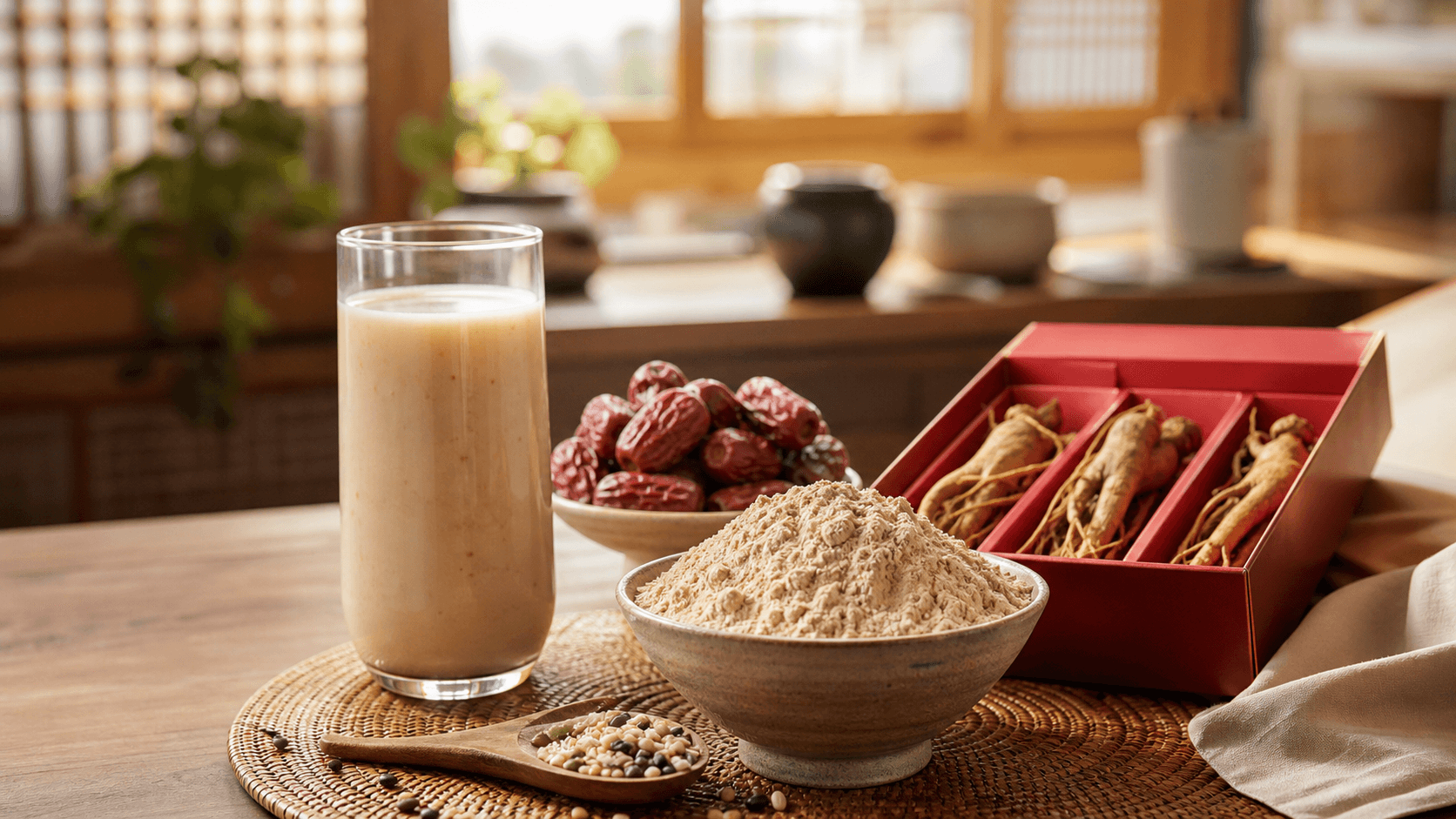
For everyday energy, Korean food culture offers practical choices: misugaru for a grain-based drink, barley tea for hydration and red ginseng products for travelers who want to explore a traditional ingredient. A balanced meal still matters more than any single drink. Buy packaged versions at supermarkets, department-store food halls or health-food counters.
Best for a quick breakfast: unsweetened misugaru mixed with milk or a plant drink.
Traditional ingredient to know: Korean red ginseng, usually sold as tea, extract, jelly or sachets.
Travel-friendly choice: individually packed grain powders and tea bags.
Misugaru: a grain drink with real meal potential
Misugaru is a roasted-grain powder commonly mixed with water or milk. Formulas vary, but may contain barley, rice, black beans, sesame or other grains. Its practical value is simple: it can combine carbohydrate with some protein and fiber, depending on the blend and what it is mixed with.
Choose unsweetened or lightly sweetened products if you want to control the final drink. Adding yogurt, milk or soy milk changes the macronutrient profile more than adding extra syrup does.
Red ginseng: a traditional ingredient, not an emergency fuel
Korean red ginseng is processed Panax ginseng. It contains ginsenosides, a group of triterpene saponins studied in relation to inflammatory signaling, oxidative-stress pathways and energy metabolism. The ingredient is woven into Korean food and gifting culture, especially in sachets and concentrated extracts.
| Item | Main food-science terms | How travelers usually see it |
|---|---|---|
| Misugaru | Complex carbohydrates, fiber, grain protein | Cafes, grocery aisles, breakfast drinks |
| Red ginseng | Ginsenosides, triterpene saponins | Extract sachets, tea, jelly, gift boxes |
| Barley tea | Roasted-grain aroma; caffeine-free by default | Restaurants and bottled-drink shelves |
| Jujube tea | Fruit-based tea concentrate | Traditional tea houses and markets |
How to shop without getting lost
Read the front label
Check whether a misugaru mix has added sugar and whether a ginseng product is an extract, tea or candy. Concentration and serving size are not interchangeable.
Pack for the flight
Powders and tea bags are usually simpler souvenirs than opened bottles. Keep any liquid or gel product within your airline and airport-security rules.
Use red ginseng thoughtfully
Red ginseng products can interact with medicines. Travelers who use prescription medication, are pregnant, or manage a medical condition should check with a pharmacist or clinician before using a concentrated product.
More Korean food to explore
Pair this guide with our Korean fermented foods guide, seaweed and sesame guide, and unique Korean gifts guide.
Sources
Background on Korean ginseng chemistry and safety: PubMed review and drug-interaction review. Last reviewed: August 27, 2026.