Korea has four distinct seasons: cold, dry winters; warm springs; hot and humid summers; and mild autumns. The temperature can change quickly between morning and afternoon, so layers are often more useful than one heavy outfit. Choose your travel month below for a simple packing answer.
Choose Your Travel Month
January: Deep Winter
Typical Seoul range: −5.5°C to 2.1°C
Cold and dry, with below-freezing mornings and possible snow or icy pavements.
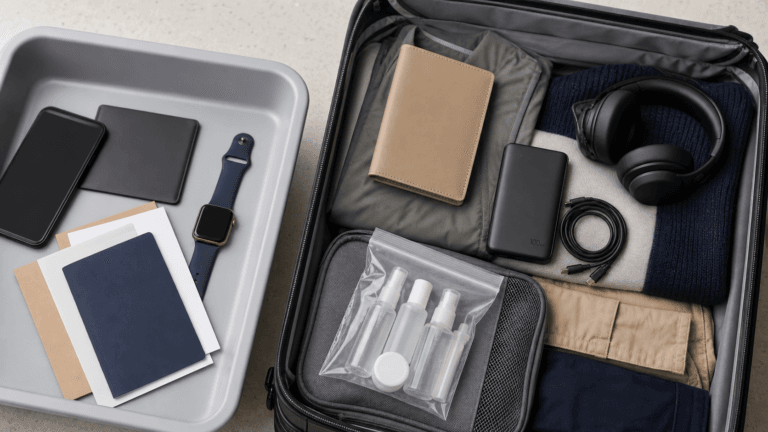
 Winter outfit example
Korea’s Monthly Temperature and Rainfall at a Glance
The figures below are average monthly daytime highs, nighttime lows and precipitation for Seoul. They are planning averages, not a trip forecast. A rain day is a day with measurable precipitation; snow can count as precipitation in winter.
| Month | Day high | Night low | Rainfall | Rain days |
|---|---|---|---|---|
| January | 2.1°C | −5.5°C | 16.8 mm | 6.1 days |
| February | 5.1°C | −3.2°C | 28.2 mm | 5.8 days |
| March | 11.0°C | 1.9°C | 36.9 mm | 7.0 days |
| April | 17.9°C | 8.0°C | 72.9 mm | 8.4 days |
| May | 23.6°C | 13.5°C | 103.6 mm | 8.6 days |
| June | 27.6°C | 18.7°C | 129.5 mm | 9.9 days |
| July | 29.0°C | 22.3°C | 414.4 mm | 16.3 days |
| August | 30.0°C | 22.9°C | 348.2 mm | 14.7 days |
| September | 26.2°C | 17.7°C | 141.5 mm | 9.1 days |
| October | 20.2°C | 10.6°C | 52.2 mm | 6.1 days |
| November | 11.9°C | 3.5°C | 51.1 mm | 8.8 days |
| December | 4.2°C | −3.4°C | 22.6 mm | 7.8 days |
When Is a Good Time to Visit Korea?
Late April to May
A comfortable choice for walking and city sightseeing. Bring light layers because evenings can still feel cool.
Late September to October
Often mild, less humid and suitable for long days outdoors. A light jacket becomes useful after sunset.
December to February
Choose winter for skiing, snow scenery and seasonal festivals—but only if you are comfortable packing serious cold-weather clothing.
One Final Packing Rule
Use the monthly advice as a starting point, then check the Korea Meteorological Administration forecast for your exact cities. A Seoul outfit may be too warm for a summer mountain hike or too light for a windy winter day.
Climate basis: Korea Tourism Organization climate guidance and Seoul monthly temperature figures; Korea Meteorological Administration 1991–2020 climate normals and the WMO World Weather Information Service for precipitation and average rain-day counts. Last reviewed: August 18, 2026.