Quick Answer
Seaweed, perilla, sesame and colorful vegetable side dishes are useful Korean ingredients to explore for a nutrient-conscious diet. They contribute different fats, minerals and plant compounds, and are easy to encounter in everyday Korean meals. Think of this as a food guide, not a skincare replacement.
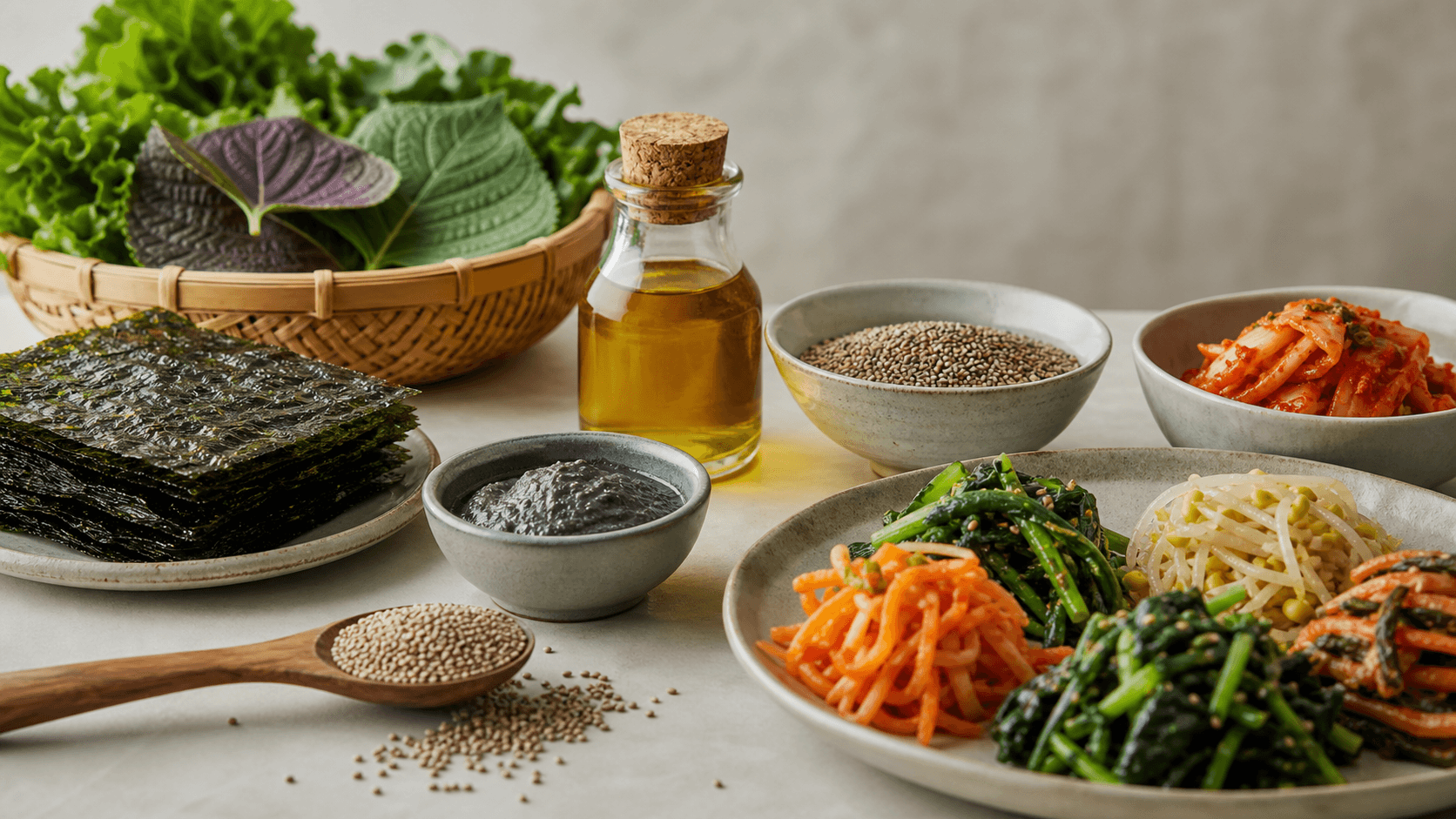
Start with: roasted seaweed, perilla-oil bibimbap and black-sesame porridge.
Food-science terms: iodine, alginate, fucoidan, alpha-linolenic acid, sesamin and carotenoids.
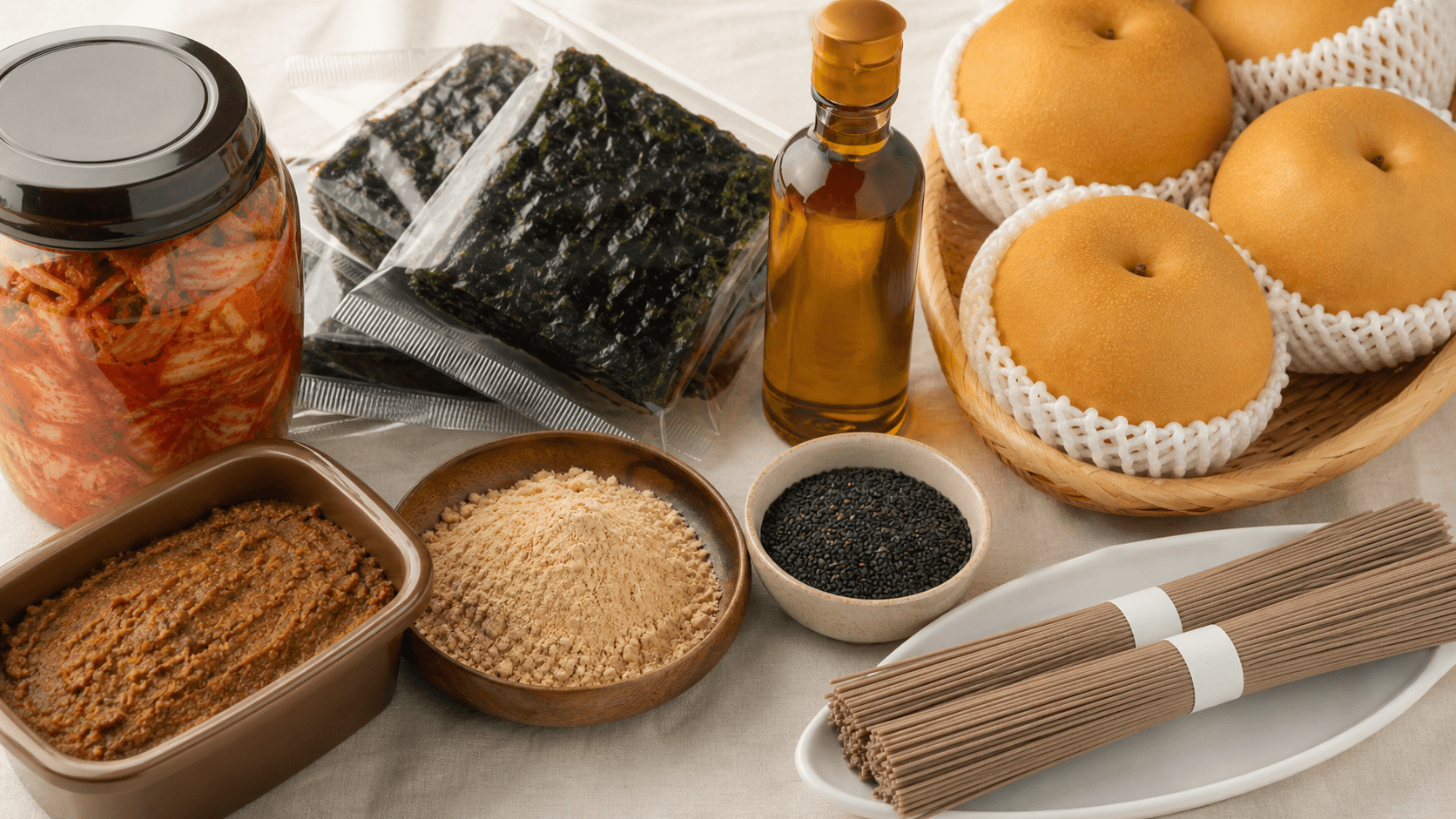
Where to buy: traditional markets, supermarkets, department-store food halls and Korean health-food shops.
Seaweed: mineral-rich, deeply Korean
Gim (roasted seaweed), miyeok (wakame) and dashima (kelp) are everyday Korean sea vegetables. Their composition differs by species, but seaweed is known for polysaccharides such as alginate and fucoidan. It can also contain substantial iodine, so portions and product labels matter.
Perilla and sesame: small seeds, distinct lipid profiles
Perilla seeds and perilla oil are notable for alpha-linolenic acid (ALA), a plant omega-3 fatty acid. Sesame contributes unsaturated fats and lignans, including sesamin and sesamolin. Black sesame is often used in porridges, dressings and sweets, bringing a deeper roasted flavor.
| Korean ingredient | Notable components | Try it as |
|---|---|---|
| Gim / miyeok | Iodine, alginate, seaweed polysaccharides | Roasted seaweed or birthday-soup-style miyeok-guk |
| Perilla oil | Alpha-linolenic acid (ALA) | A finishing oil over noodles or bibimbap |
| Black sesame | Sesamin, sesamolin, unsaturated fats | Juk (porridge) or sesame dressing |
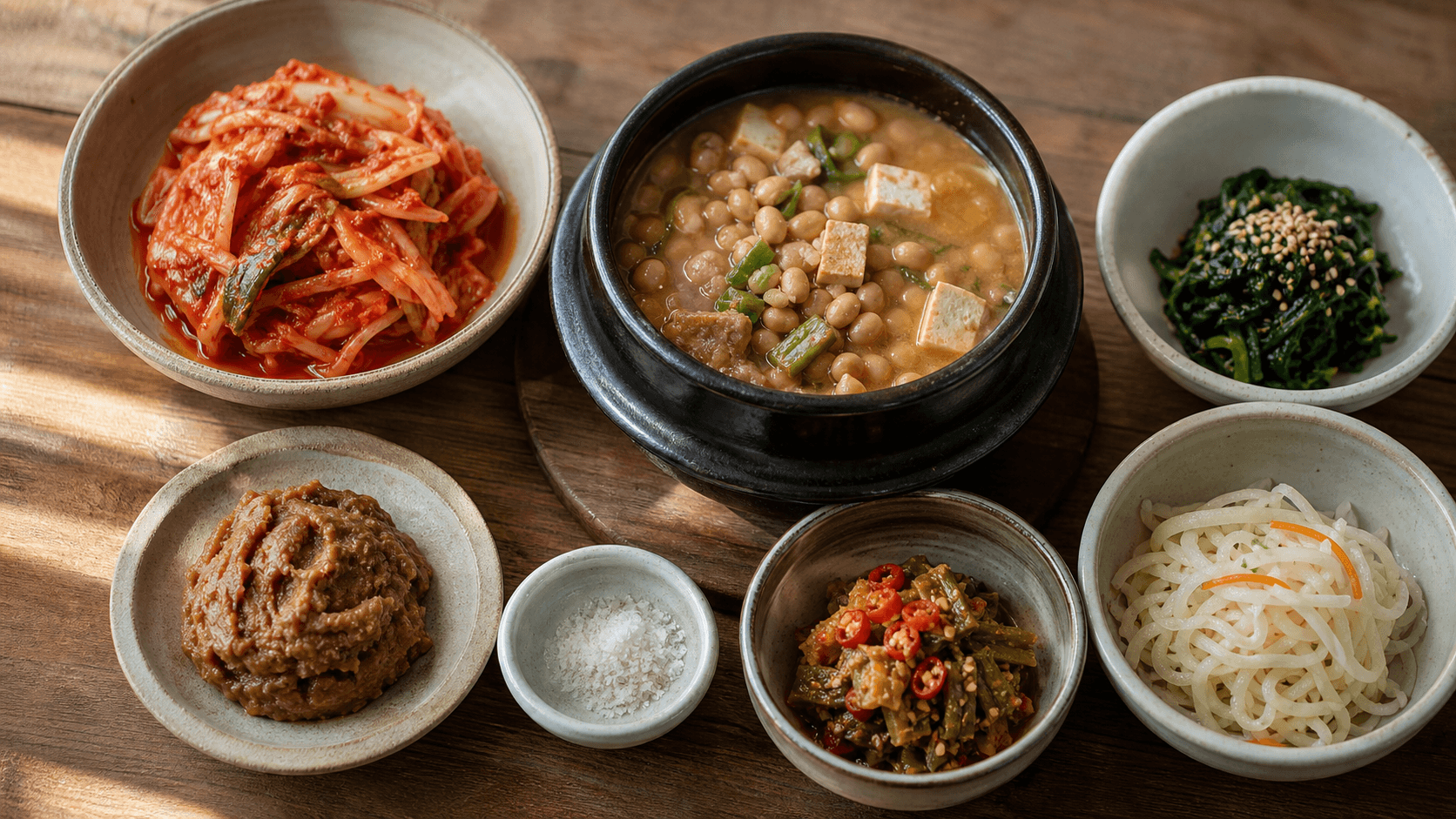
| Kimchi and greens | Plant fiber, organic acids, carotenoids depending on vegetables | Small side dishes with a full meal |
A practical Korean meal pattern
A useful approach is to order a rice bowl with vegetables, then add a small seaweed side and a sesame- or perilla-based dressing. This lets the ingredients work as part of an ordinary meal instead of turning a single food into a “beauty” product.
Shopping checklist
Look for sealed roasted gim packs, small bottles of perilla oil and ground black-sesame powder. Keep oils away from heat and buy only a size you can use while fresh.
Build your wider Korean food list
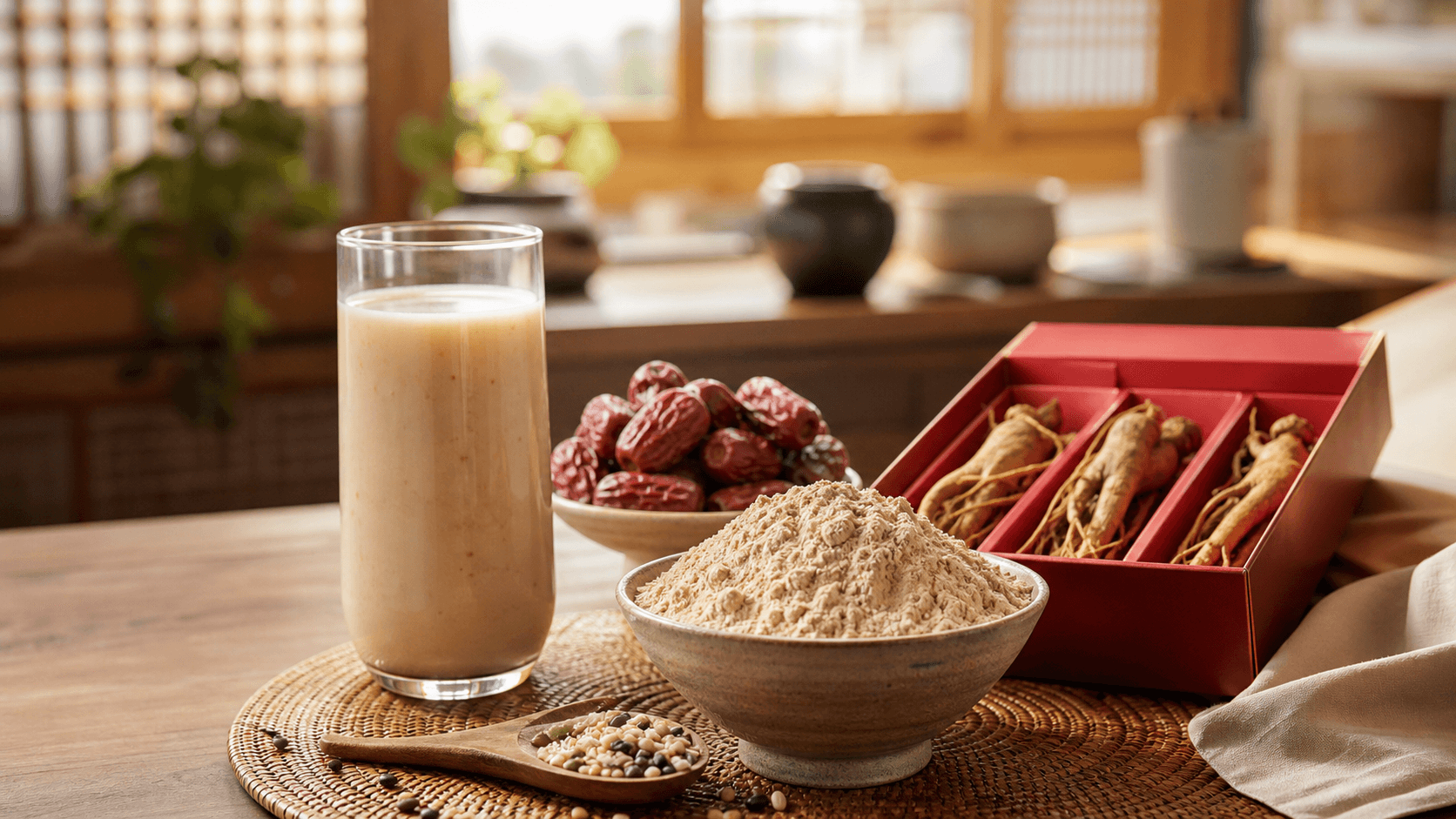
Continue with kimchi and fermented foods, misugaru and red ginseng, and our 10-item Korean pantry list.
Sources
Ingredient background: Korean food composition references and peer-reviewed literature on seaweed polysaccharides and sesame lignans. Last reviewed: August 27, 2026.