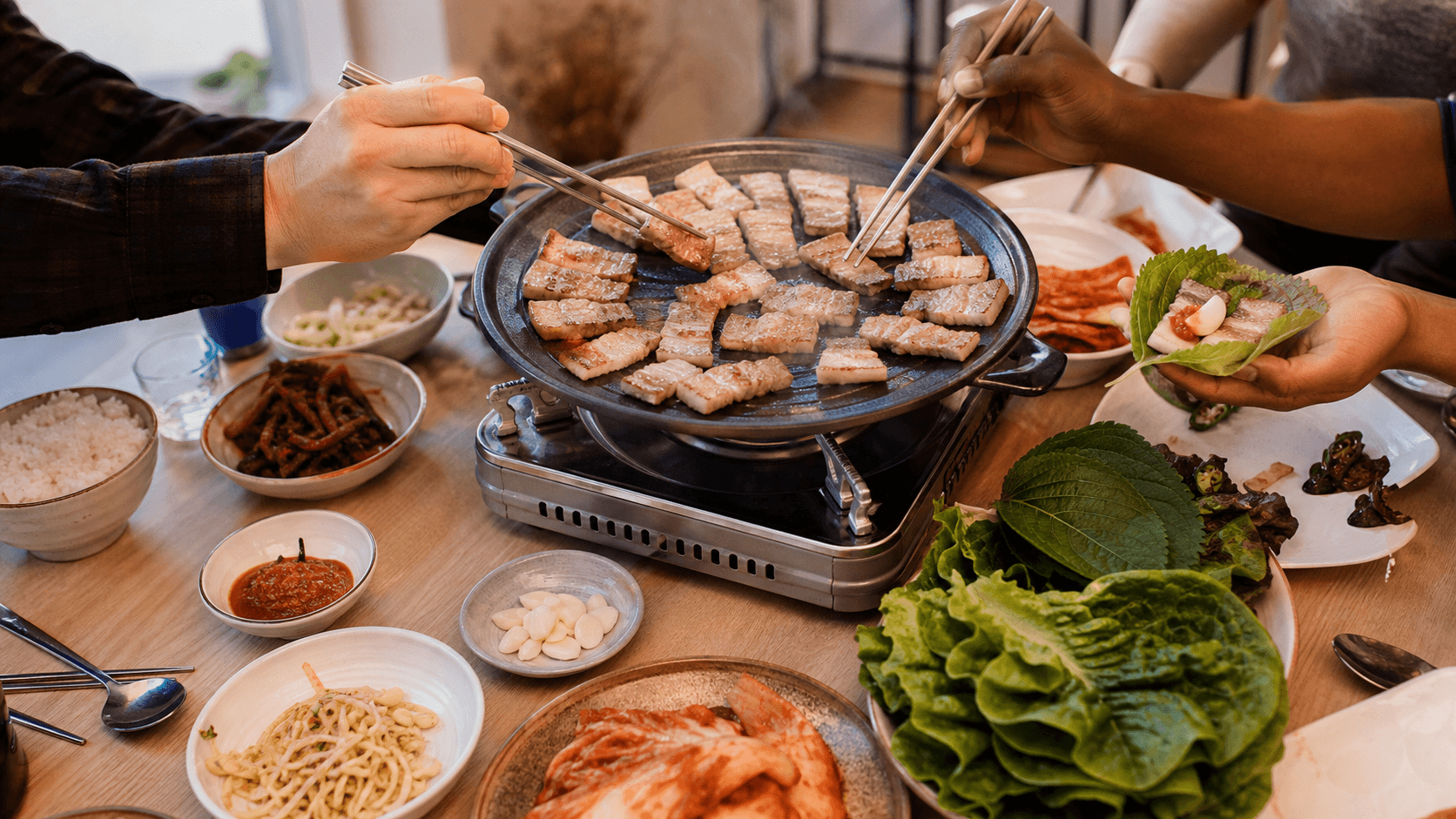
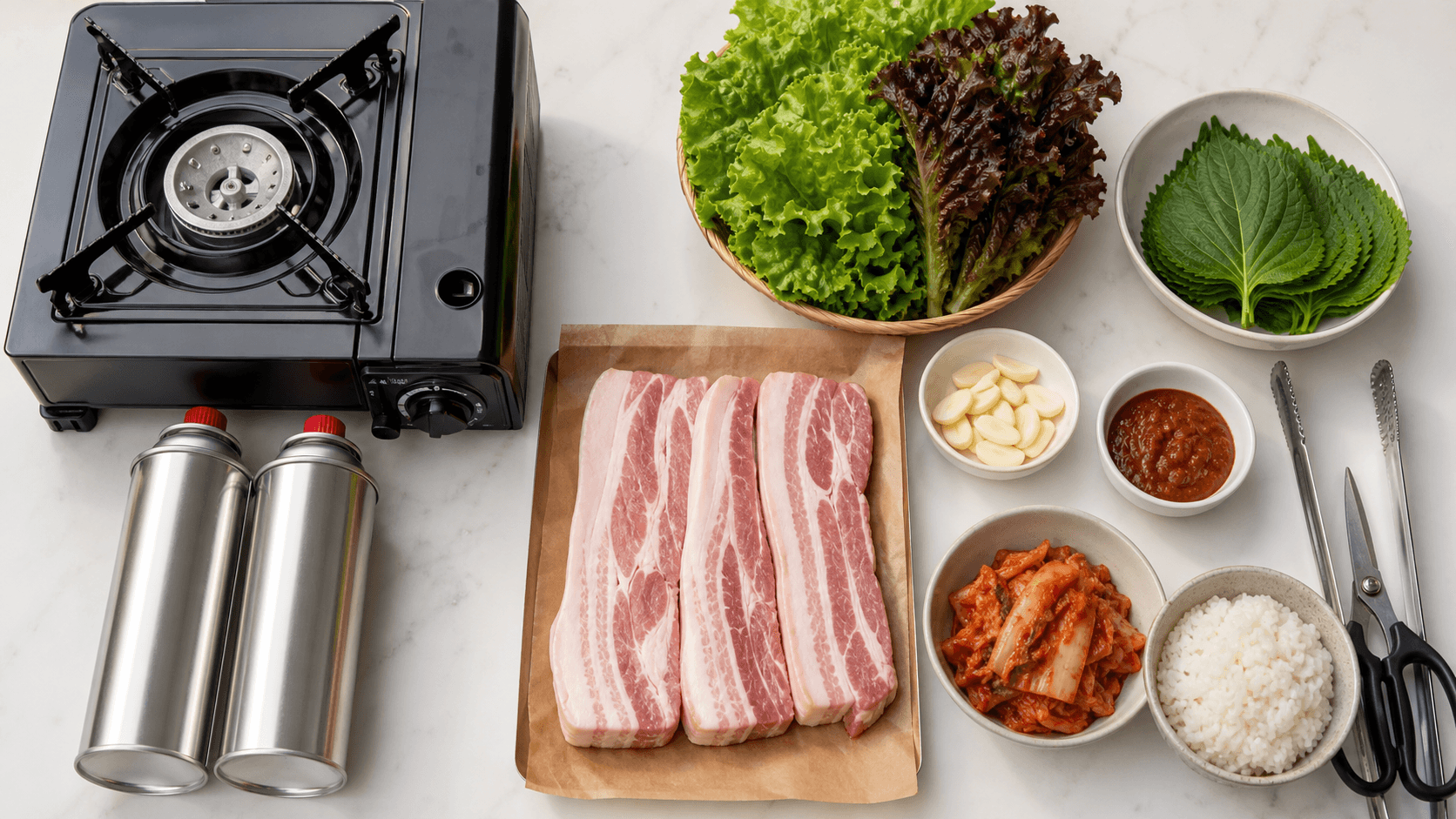
Want Korean BBQ without a restaurant? A Korean grocery store can supply almost everything you need for a relaxed table meal with friends or family: a portable gas stove, pork belly, fresh wrap leaves, ssamjang and a few simple side dishes. Start small, cook in batches and let everyone build their own wrap.
Quick Answer
- For a classic first Korean BBQ at home, buy a portable cassette gas stove, compatible butane canisters, pork belly, lettuce or perilla leaves, ssamjang, garlic, kimchi and rice.
- Ask the butcher for pork belly; it may be labelled samgyeopsal, belly slices or thick-cut bacon-style pork belly.
- Cook on a stable, well-ventilated table, follow the stove manual, and serve the meat in small batches so everyone eats it hot.
Your Korean grocery store checklist
| What to buy | Look for | Why it matters |
|---|---|---|
| Portable stove | Cassette / butane gas stove | The compact tabletop burner used for many home BBQ meals. |
| Fuel | Compatible butane canisters | Buy the type specified by your stove and keep a spare. |
| Grill pan | Round grill pan or ridged pan | A pan with a slight slope helps move excess fat away from the meat. |
| Meat | Pork belly / samgyeopsal | The easiest starting point: rich, forgiving and usually unseasoned. |
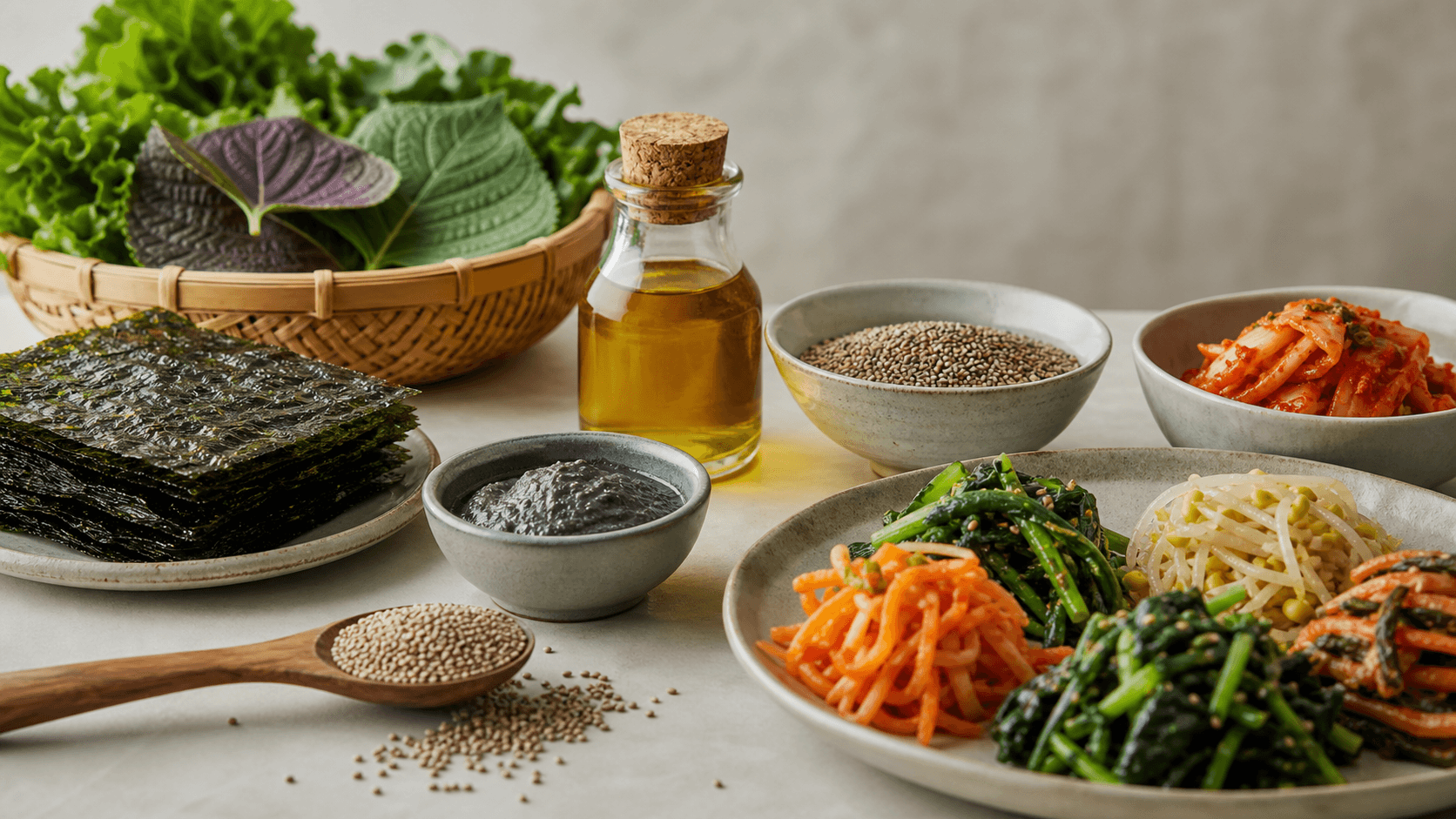
| Wrap leaves | Red leaf lettuce, green lettuce, perilla leaves | These make a ssam, the hand-held Korean BBQ wrap. |
| Essential sauce | Ssamjang | A savoury, slightly sweet soybean-and-chilli paste made for wraps. |
| Simple extras | Garlic, kimchi, steamed rice | They add contrast without making the meal complicated. |
Choose the meat: start with samgyeopsal
Samgyeopsal means pork belly. It is usually cut into thick strips, not cured or smoked like breakfast bacon. Look for slices with visible layers of meat and fat. Plan roughly 150 to 200 g of raw meat per adult when pork is the main dish, then adjust for side dishes and appetites.
If pork belly is unavailable, thinly sliced pork shoulder, beef short rib slices or rib-eye can work. Keep the first meal simple: unseasoned pork belly makes it easy to learn the grill-and-wrap rhythm before trying sweet marinades such as bulgogi.
Set up the table safely
- Place the cassette stove on a stable, heat-safe table with clear space around it.
- Use only the fuel canister specified by the manufacturer. Insert it exactly as the manual shows.
- Keep ventilation good, keep children away from the hot pan, and never leave the burner unattended.
- Set out tongs for raw meat, kitchen scissors for cutting cooked meat and separate chopsticks or serving tongs for eating.
- Keep the fuel canister away from heat. Turn the burner off and let it cool before moving or replacing anything.
How to grill pork belly
Heat the pan over medium to medium-high heat. Place a few pieces of pork belly on the grill, leaving room between them. Once the first side browns, turn the pieces and cut them into bite-size sections with kitchen scissors. Continue cooking until the centre is no longer pink and the surface is well browned.
For food safety, use a clean thermometer when possible. The USDA advises cooking whole cuts of pork to 63°C / 145°F followed by a three-minute rest. Thin slices cook quickly, so avoid crowding the pan and always keep raw-meat tools separate from cooked food.
Build your first ssam
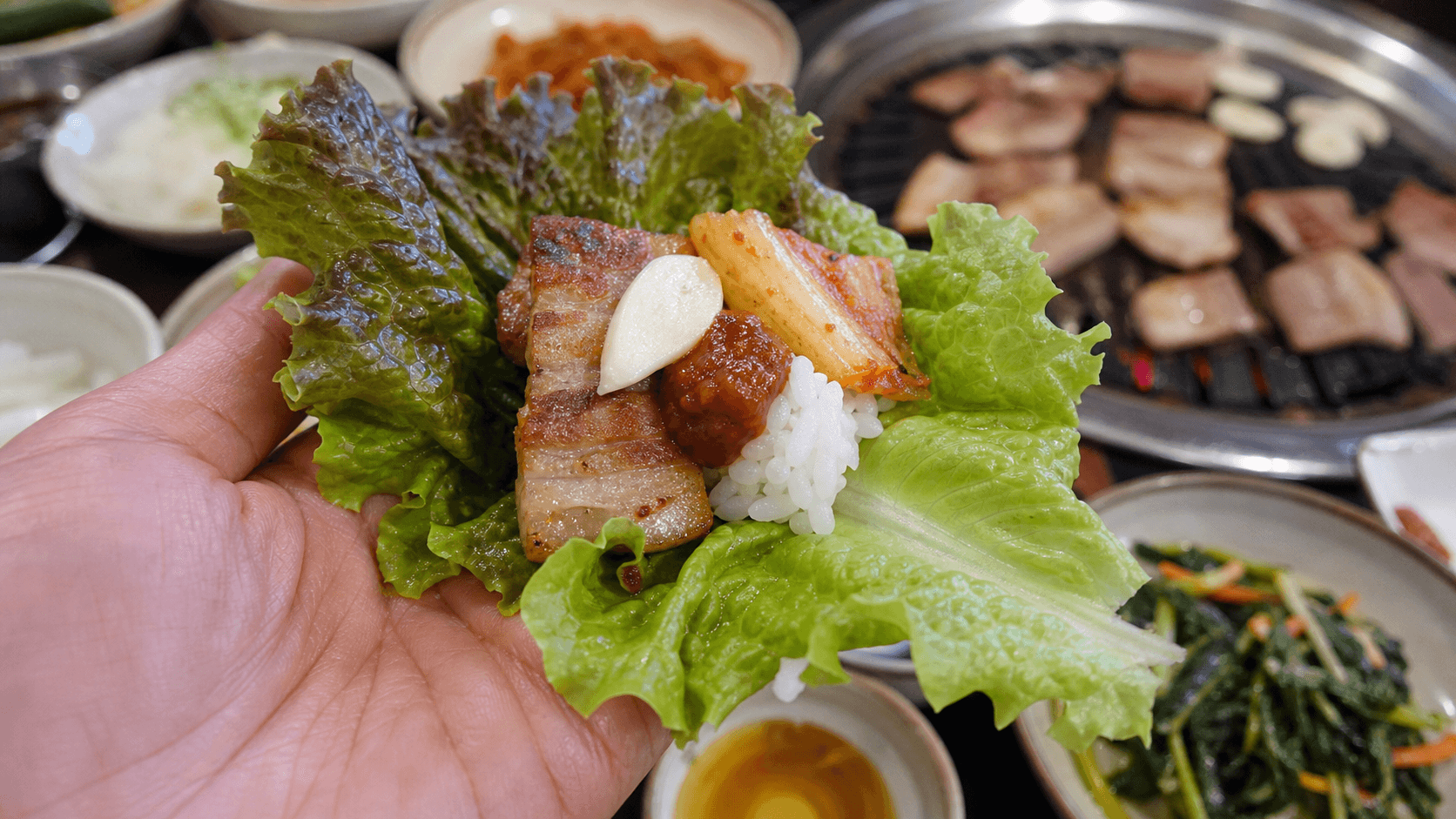
- Take one large lettuce leaf. Add a perilla leaf if you like its herbal flavour.
- Add a small spoonful of rice.
- Place one or two pieces of grilled pork on top.
- Add a little ssamjang, plus garlic, kimchi or sliced chilli if you want.
- Fold it into a compact bundle and eat it in one or two bites.
There is no single correct combination. A good first wrap is lettuce, pork belly, a small dab of ssamjang and kimchi. Keep the portion compact; a wrap that is too full is difficult to hold and overwhelms the flavours.
Easy sides that make the table feel complete
- Kimchi: Serve it cold, or grill a little beside the pork once the pan has rendered some fat.
- Garlic: Slice it thinly and cook it gently on the edge of the pan.
- Rice: Plain steamed rice balances the rich pork and sauce.
- Fresh vegetables: Cucumber sticks, mushrooms and sliced onion are easy additions.
- Drinks: Water, sparkling drinks, beer or a non-alcoholic option all work well; the meal does not require a specific drink.
Make it social, not stressful
Korean BBQ works best as a shared table meal rather than a fully plated dinner. Grill a small round of meat, make wraps, talk, then start another round. For a first home session, focus on pork belly, wraps and two or three sides. It is more enjoyable than buying every possible ingredient at once.
This guide is a practical home-cooking introduction. Check your portable stove instructions and local food-safety guidance before cooking.