Quick answer: If you experience racist or discriminatory treatment in a Korean restaurant, shop, hotel, taxi or public place, put your safety first. Leave if the situation feels threatening, record the basic facts without escalating the confrontation, and use the right help line for the issue: 112 for an immediate police matter, 1330 for travel assistance, 1345 then press 1 for multilingual foreigner human-rights support and referrals, and 1331 for the National Human Rights Commission of Korea.
A recently shared news report about a tourist’s upsetting restaurant encounter is a reminder that a single experience can leave a visitor shocked and unsure what to do next. One report does not define an entire country or travel experience. But no visitor should have to guess how to respond when they feel they have been treated differently because of race, nationality, language, religion or appearance.
SAVE THESE NUMBERS
1. Get yourself to a safe place first
You do not need to win an argument in the moment. If someone is shouting, blocking your way, touching you, following you or making you fear for your safety, leave the venue and move to a busy, well-lit place. Call 112 for police if there is an immediate threat or suspected crime. Call 119 for an ambulance or fire emergency.
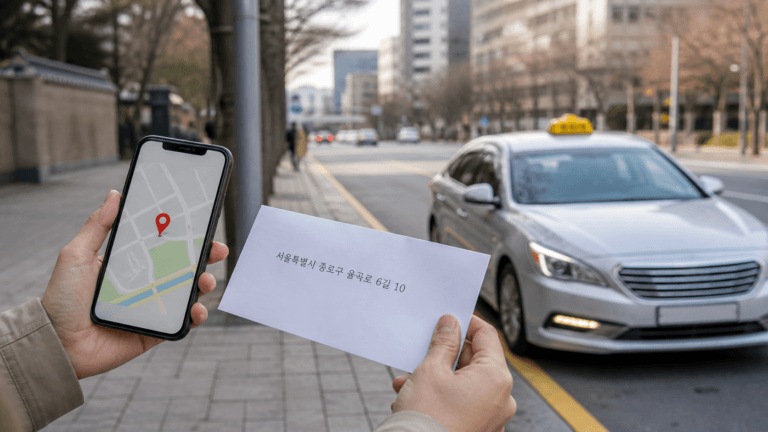
Korea Tourism Organization guidance says callers who do not speak Korean can say “English please” or “Interpreter please” when calling 112 or 119. Give your location using a nearby building name, a map pin or your phone’s GPS. The Baro Emergency Reporting app also supports text and image reporting in multiple languages.
2. Calmly ask for a manager and the basic business details
If you feel safe enough to stay briefly, ask for the manager rather than debating with the staff member. Request the receipt and note the business name, address, time and the names or descriptions of the people involved. Keep your words factual: explain what happened, what was said or done, and what result you want.
- 매니저를 불러 주세요. Mae-nijeo-reul bulleo juseyo. — Please call the manager.
- 영수증을 주세요. Yeongsujeung-eul juseyo. — Please give me the receipt.
- 경찰을 불러 주세요. Gyeongchareul bulleo juseyo. — Please call the police.
3. Preserve useful evidence without putting yourself at risk
Evidence does not have to mean a dramatic confrontation. As soon as you are somewhere safe, make a short note with the date, approximate time, venue, what happened, who was present and any exact words you remember. Take a screenshot of reservations or messages, keep receipts and payment records, and photograph a posted rule or sign if it is relevant and safe to do so.
If someone witnessed the event, ask whether they are willing to share a name or contact method. Do not chase staff, enter restricted areas or keep filming if that makes the situation worse. For serious incidents, tell the police about nearby CCTV rather than trying to obtain footage yourself.
4. Choose the right reporting route
For an urgent safety or crime concern: 112. Use this when there has been violence, a threat, harassment that feels unsafe, theft, confinement or another immediate police matter. The police can take a report and help preserve urgent evidence.
For travel help and interpretation: 1330. The Korea Travel Helpline is available 24/7 and provides multilingual tourist assistance. It can connect travelers to related services, including immigration, emergency and tourist-complaint channels.
For foreigner human-rights counseling and referrals: 1345, then press 1. The Ministry of Justice’s Immigration Contact Center provides multilingual counseling for foreign nationals. Its dedicated Press 1 line accepts reports of foreign human-rights violations and can provide counseling and refer cases to the relevant support body. The program was introduced with particular emphasis on foreign workers, but 1345 is also a practical place for a visitor to ask which official channel fits their situation and to request multilingual assistance.
For a human-rights complaint or counseling: 1331. The National Human Rights Commission of Korea provides counseling and complaint guidance, including multilingual complaint forms. This can be especially relevant when the central issue is discriminatory treatment rather than an immediate police emergency.
5. Use Ready4Korea’s emergency tool
Keep our Korea Emergency Help page bookmarked before you travel. It gathers the essential emergency numbers and practical first steps in one place, so you do not have to search while stressed.
What to include when you call or report
- Your name and a safe contact method
- The venue name, address or map location
- Date and time of the incident
- A short factual description of what happened
- Whether you feel unsafe now
- Any receipt, booking, screenshot, photo or witness information you have
- The language you need for support
A final note for travelers
Racism and discrimination are serious, and a visitor’s reaction does not need to look a certain way to be valid. You may decide to leave, report it immediately, ask for a refund, write a factual review later, or seek advice before deciding. The useful first move is usually the same: get safe, write down the facts, keep the evidence you already have, and contact a service that can guide you in your language.
Official support links
- Korea Tourism Organization: safety services for international visitors
- Ministry of Justice: 1345 Press 1 foreign human-rights reporting line
- National Human Rights Commission of Korea: multilingual complaint guide
- Korea Travel Helpline 1330
Last verified: August 25, 2026. This guide provides practical travel information, not legal advice.