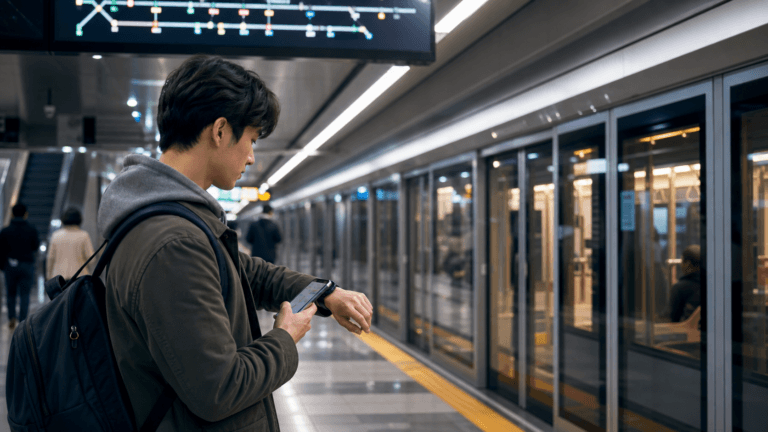
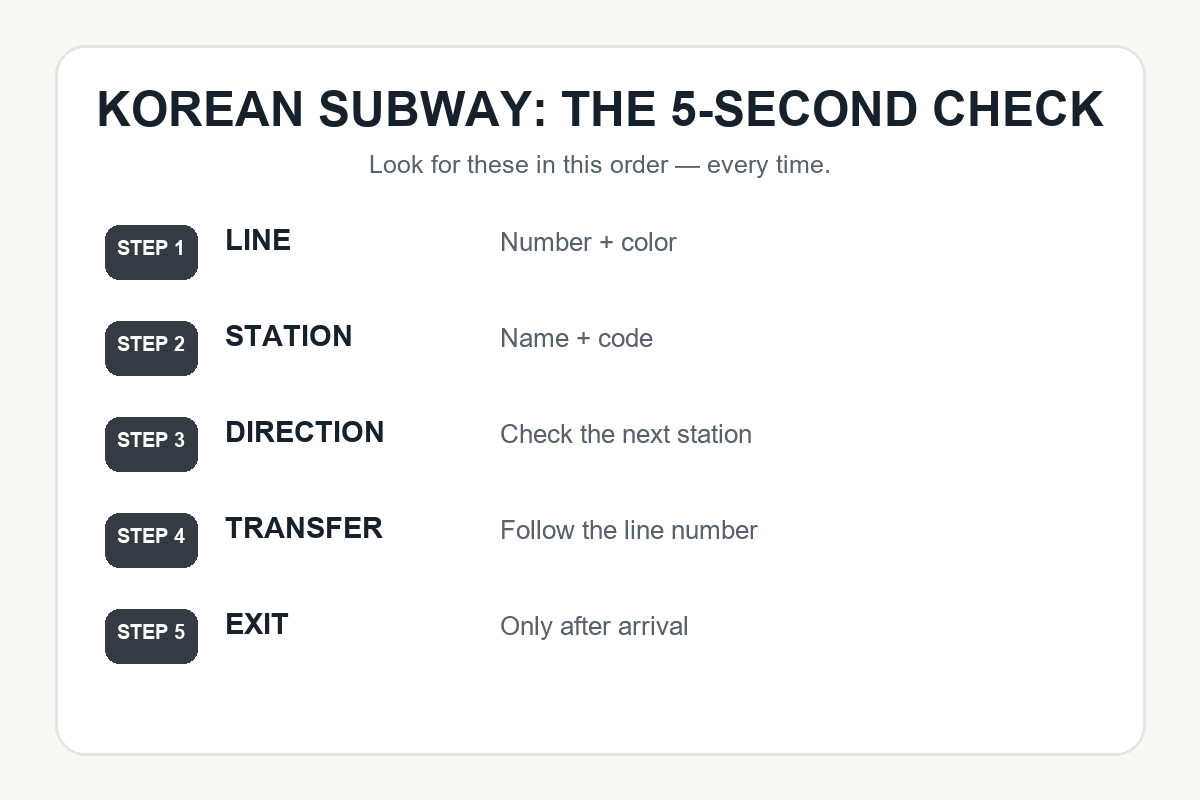
Quick answer: To avoid getting lost on the Korean subway, check five things in order: line number, station number, next station, transfer line, and exit number. The most important trick is to confirm the next station before you board—not just your final destination.
This is the navigation companion to our Seoul Subway First-Time Visitor Guide. Use that guide for cards, tickets, fares, and the full first-ride process. Use this page when you need to choose the right direction, make a transfer, or find the correct exit without getting lost.
Korean subway systems are foreigner-friendly, but a busy interchange can still be confusing when several arrows, colors, and station names appear at once. You do not need to understand every sign. Use the same short checking routine at every stage of the trip.
1. Save the route before entering the station
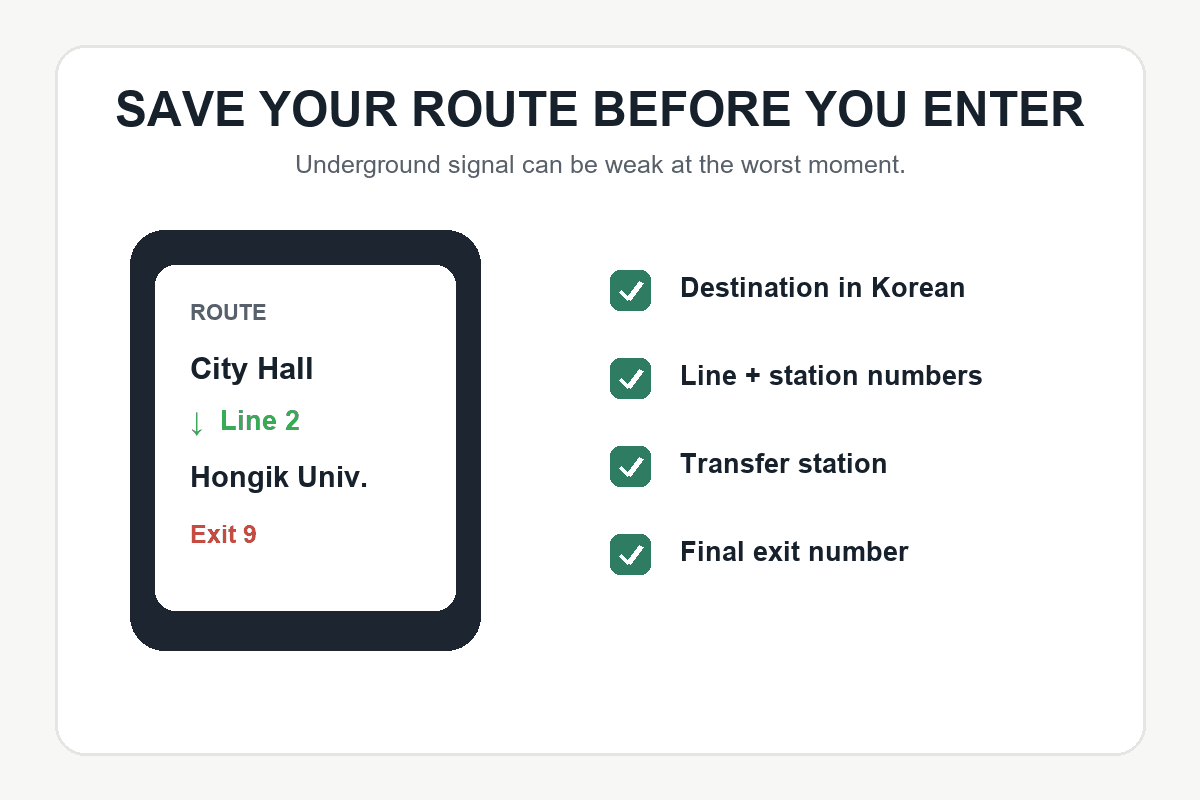
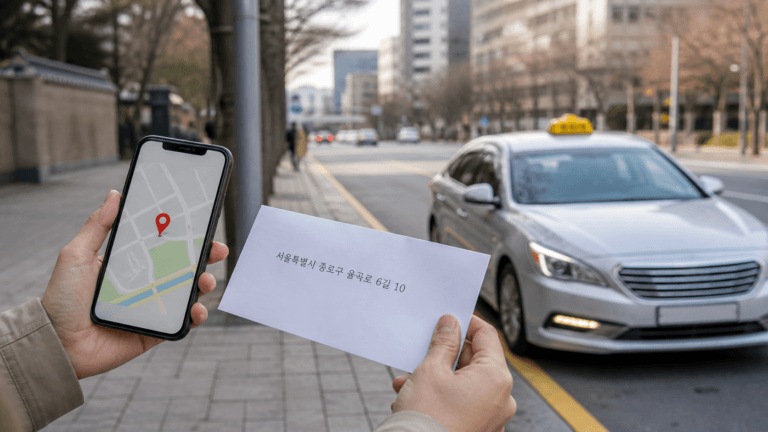
Search your route in NAVER Map, KakaoMap, or another Korea-friendly transit app before going underground. Take a screenshot that shows your destination in Korean, line numbers, transfer station, and final exit. Underground reception can be weak, and reopening a route while people move around you is stressful.
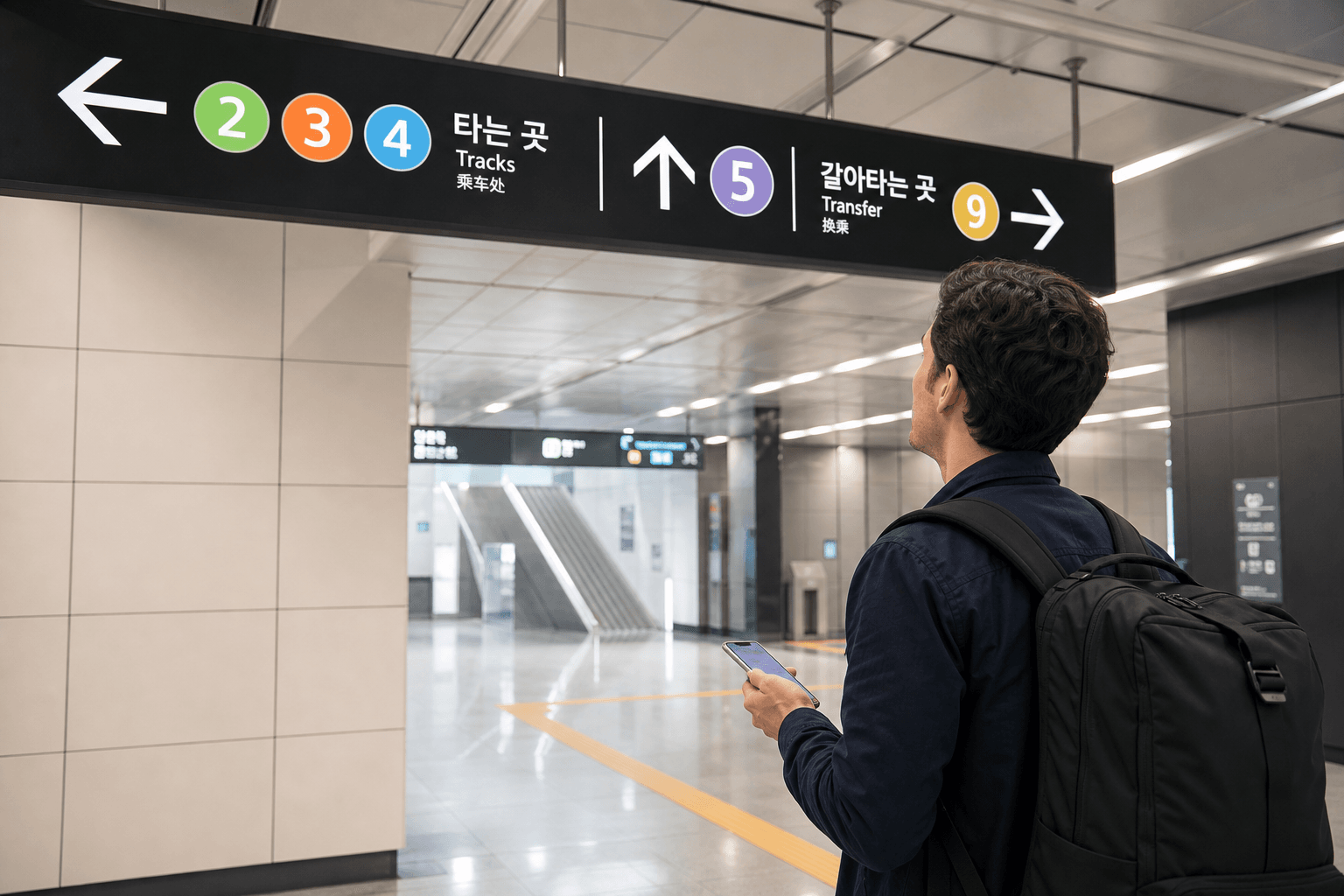
Do not rely on line color alone. Several networks use similar colors, and color can look different on signs and screens. Match the line number or letter as well.
For the final walk from the station, save your destination in Korean. The Korean Address Converter can turn a Korean address into a copyable English format before you go underground.
2. Read a platform sign in ten seconds
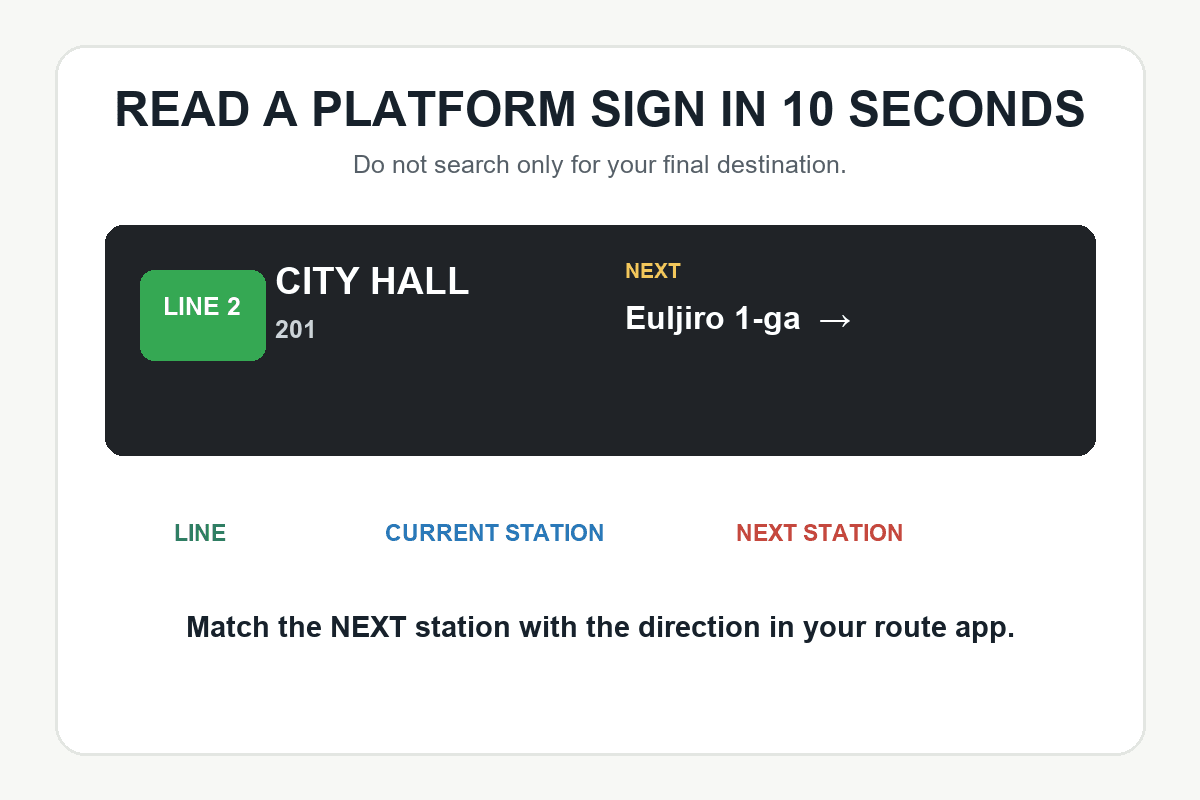
First find the line number. Then find the current station name or station code. Finally, look for the station shown after it. If that next station matches the direction in your route app, you are on the correct platform.
Your final destination may not be printed on the platform sign, especially when it is many stops away. That does not mean you are in the wrong place.
3. Choose direction by the next station
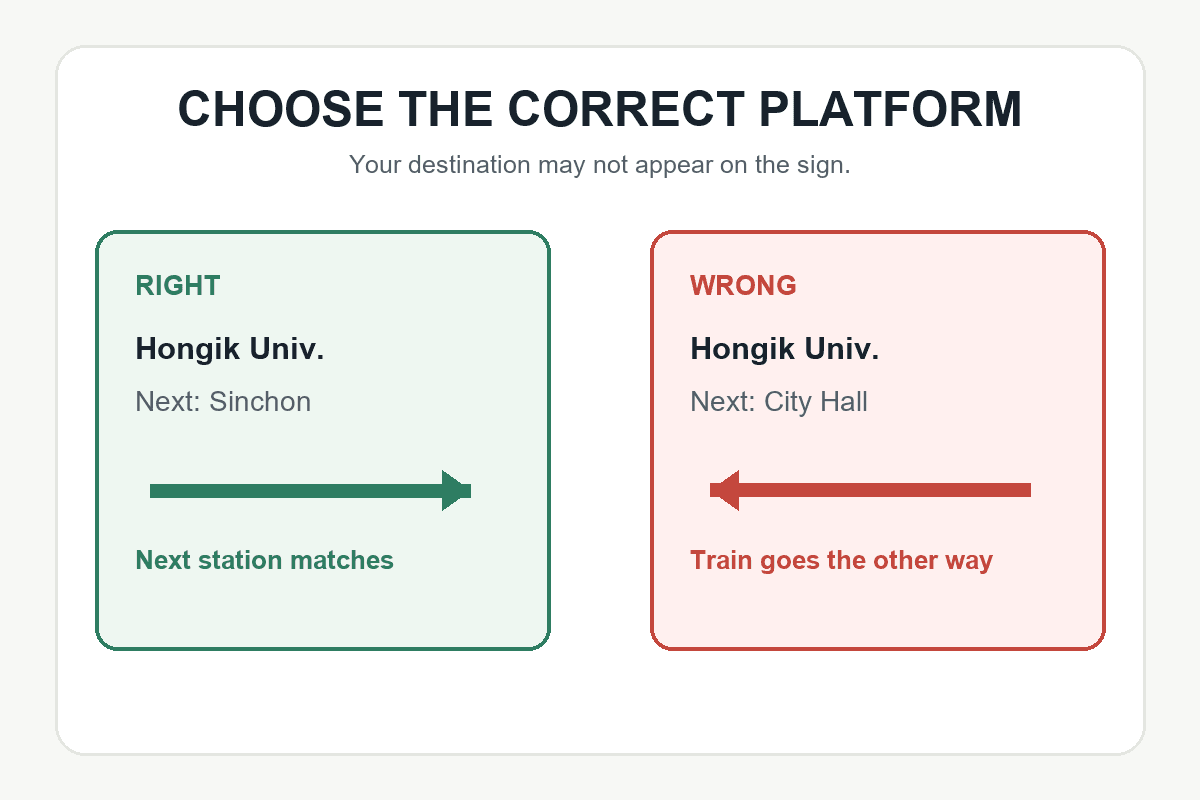
Imagine you are traveling to Hongik University Station. One platform’s next station is Sinchon; the other points back toward City Hall. Compare those next-station names with your saved route. This works even when the platform sign does not list Hongik University.
On circular lines such as Seoul Line 2, signs may also use inner circle and outer circle. The next-station check is still easier than memorizing those terms.
4. Check again after boarding
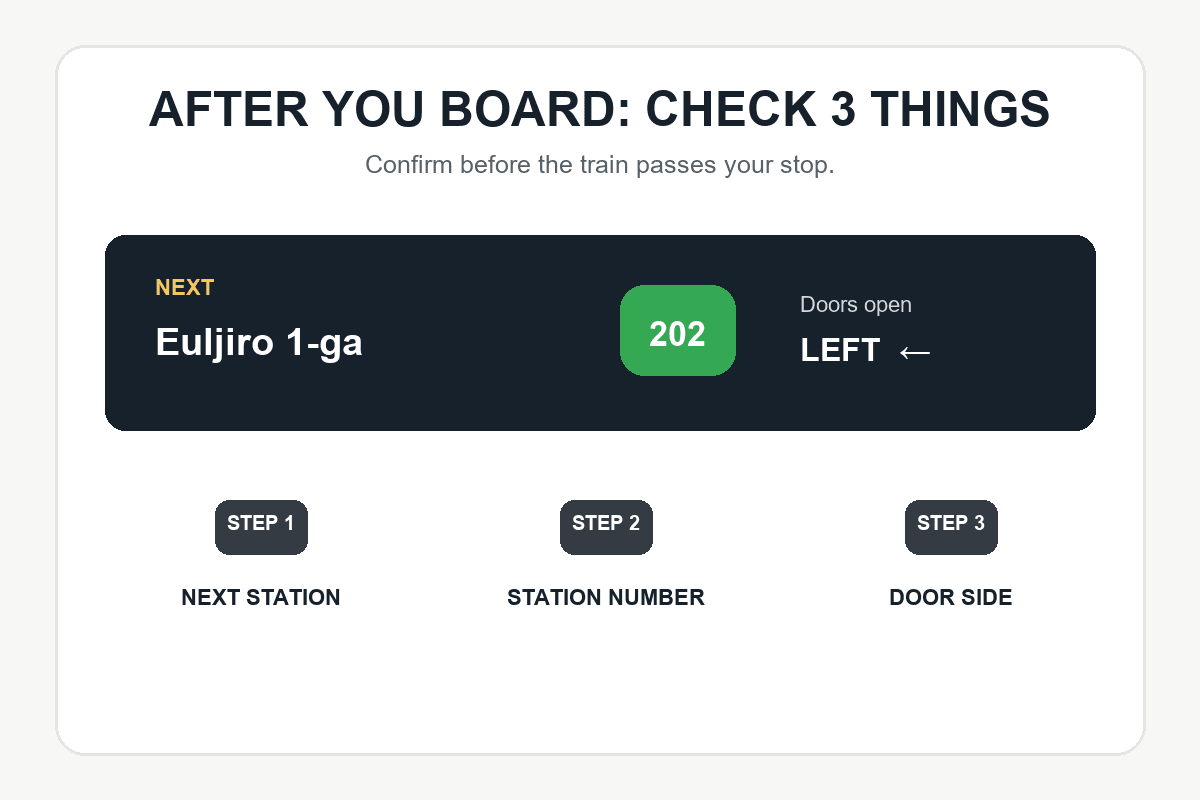
Look at the carriage display or the route panel above the doors. Confirm the next station and its number. Announcements commonly include English, but the screen is easier to follow in a noisy carriage.
Watch for express trains. An express train may pass your station. Before boarding, check that your destination appears as a stopping station in your route app or on the platform information display.
5. Follow Transfer—not Exit
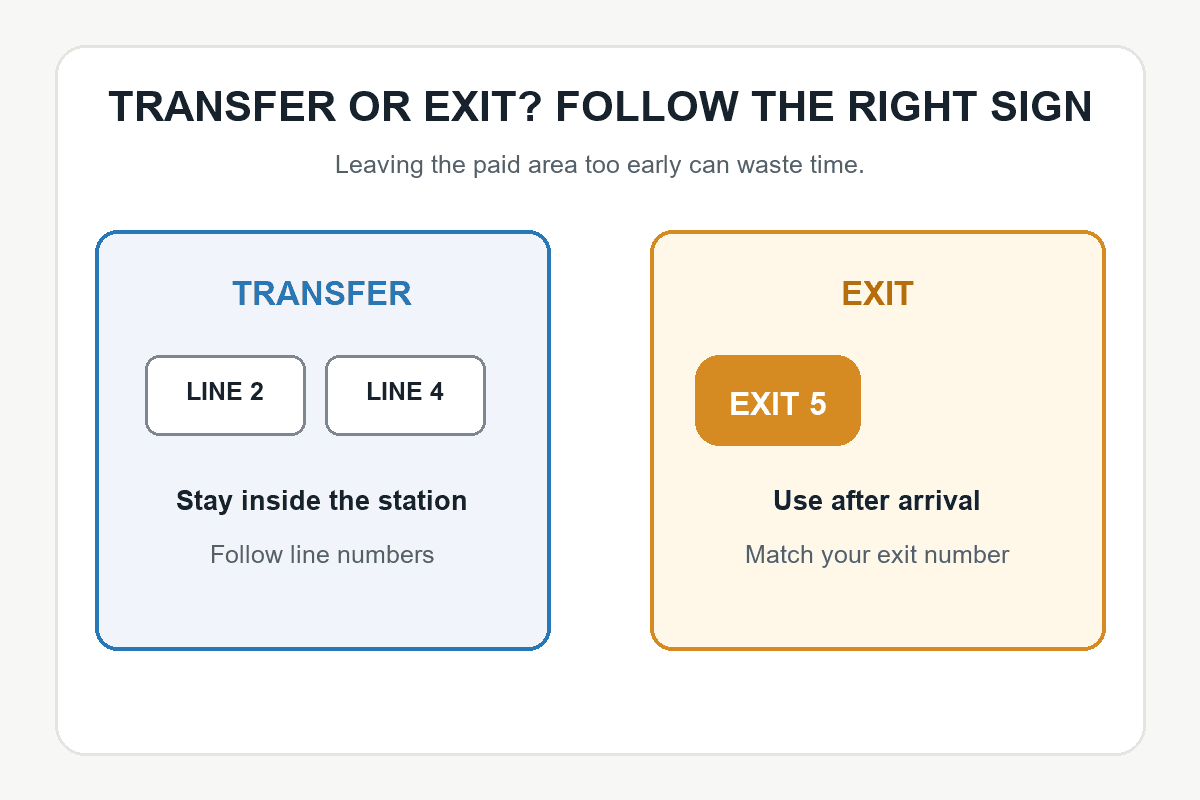
At an interchange, follow the number and color of your next line. Do not follow an exit number until you reach your final station. Transfer corridors can be long, so keep following the same line marker even when the next platform is not immediately visible.
6. If you take the wrong train
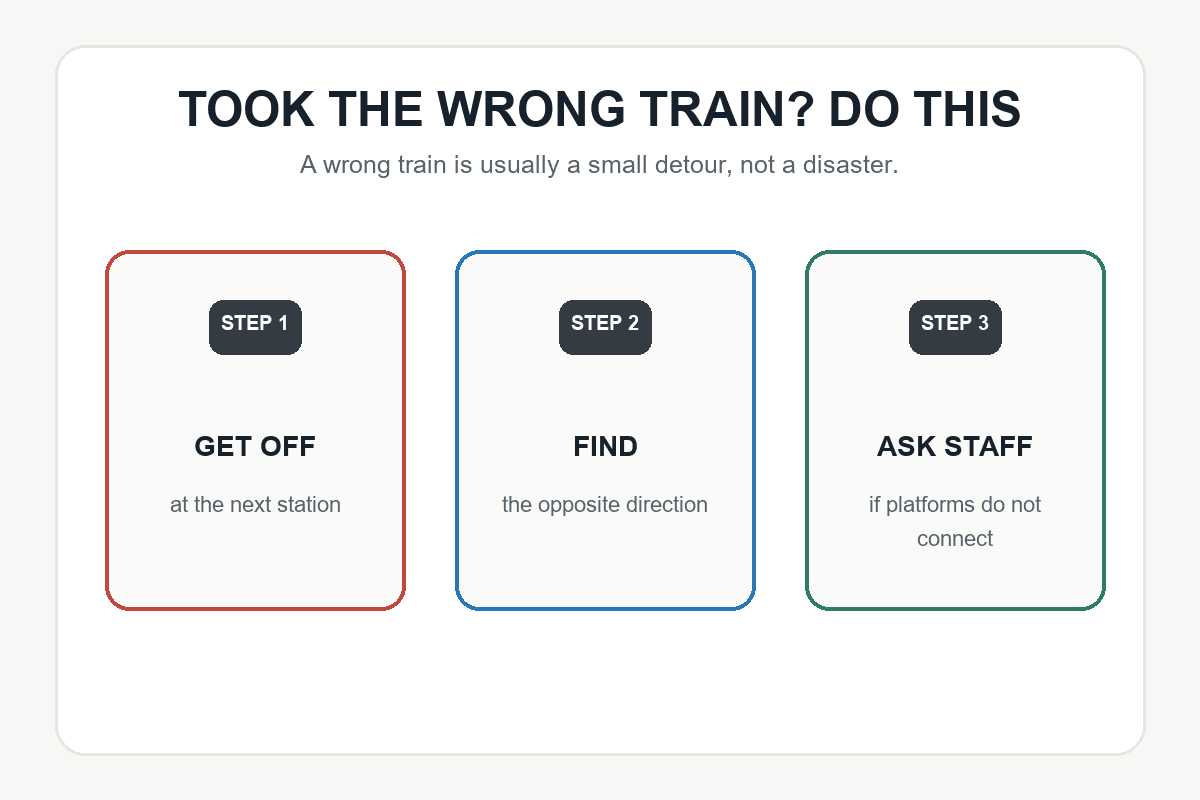
Get off at the next station. Look for the platform going in the opposite direction and check its next station before boarding. Some stations connect both directions inside the paid area; others may require stairs, a longer passage, or help from station staff.
If a gate blocks the way, do not keep tapping your card. Show your route to a staff member at the gate or information window.
7. Show these phrases to station staff
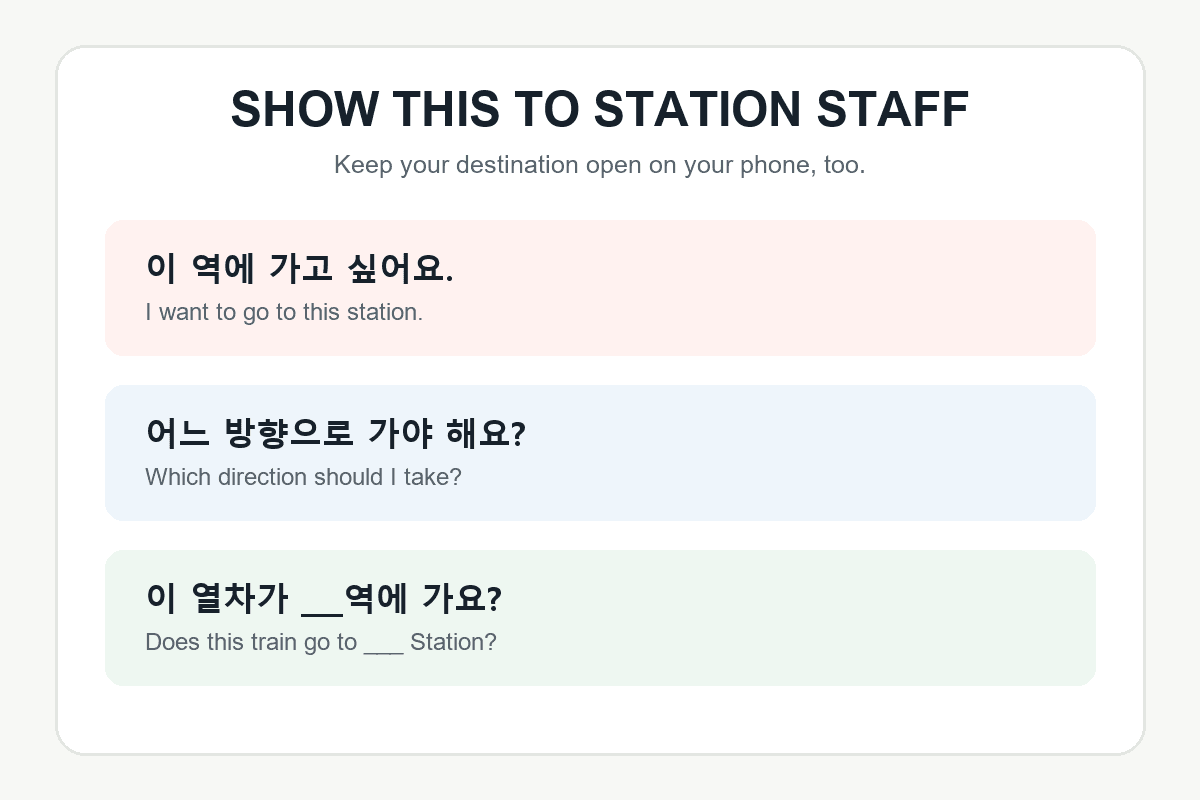
Keep the destination page open on your phone. Point to the station name and show the Korean sentence. A station name is more useful than a hotel name because staff can identify the correct line and direction immediately.
The one image to send a friend
If a friend is visiting Korea, send them this checklist before the trip. Remembering one sequence is more useful than trying to memorize an entire subway map.
Frequently asked questions
Are Korean subway signs available in English?
Major urban subway systems use English on station signs, platform displays, and many train announcements. Station numbers are especially useful when English spellings are difficult to recognize quickly.
What is the easiest way to know which direction to take?
Compare the next station shown on the platform sign with the next station in your route app. Do not wait for your final destination to appear on the sign.
What if I miss my stop?
Get off at the next station and find the opposite-direction platform. If the platforms do not connect inside the paid area, ask station staff before passing through a gate.
Last verified: September 10, 2026. Guidance is based on information from the Seoul Metropolitan Government, its current subway information, and the VISITKOREA subway route service. Sign designs and operating patterns vary by city and line.